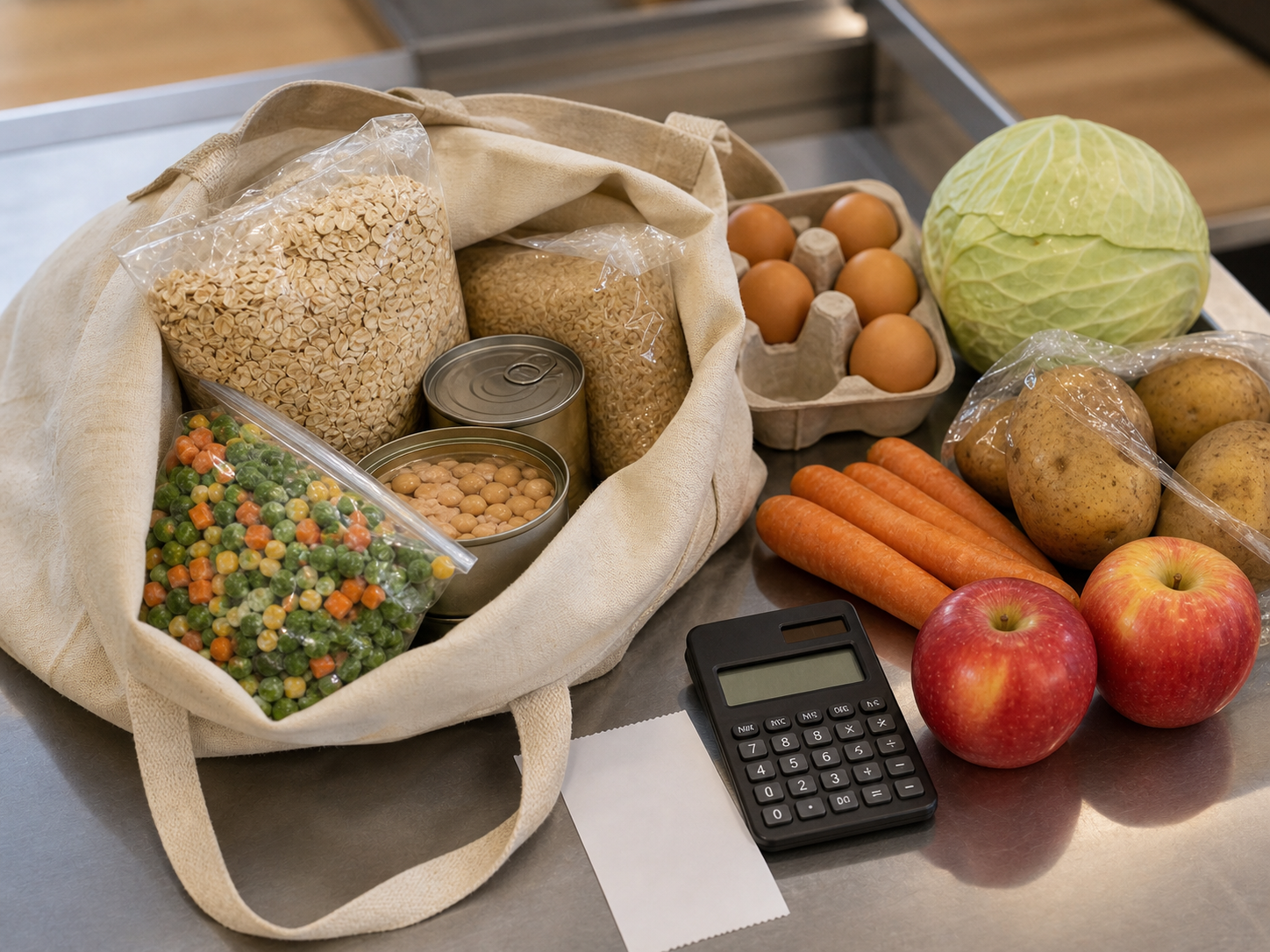
Quick answer: A healthy grocery list on a budget should start with affordable protein, fiber-rich staples, low-cost fruits and vegetables, meal connectors, and a small number of satisfying snacks. Eggs, beans, lentils, oats, potatoes, rice, frozen vegetables, apples, canned fish, tofu, and plain yogurt can do more for your week than a cart full of expensive "health" products.
The phrase "healthy groceries" can sound expensive before you even reach the store. It brings to mind tiny packages, premium bars, protein things in matte wrappers, and a loaf of bread priced like it has a graduate degree. That is not the goal here. A budget-friendly healthy cart is less about buying special food and more about buying food that becomes meals.
The receipt is the honest part. It shows whether your money went toward breakfasts, lunches, dinners, and filling snacks, or whether the cart drifted into duplicate treats, sweet drinks, and lonely ingredients that never become anything. If you can read the receipt for patterns, you can make the next trip better without counting every calorie or trying to become a different person in the produce aisle.
The budget healthy cart formula
USDA MyPlate frames healthy eating around fruits, vegetables, grains, protein foods, and dairy or fortified alternatives. That is a useful starting point because it keeps the cart grounded in food groups instead of hype. For a budget trip, translate that into five grocery jobs:
| Cart job | Budget examples | Why it matters |
|---|---|---|
| Protein anchors | Eggs, beans, lentils, canned tuna, tofu, Greek yogurt, chicken thighs, cottage cheese. | They turn groceries into meals and help snacks feel more filling. |
| Fiber staples | Oats, beans, lentils, potatoes, frozen vegetables, apples, cabbage, carrots, brown rice. | They add volume, texture, and staying power without relying on pricey diet foods. |
| Meal connectors | Rice, tortillas, pasta, potatoes, bread, salsa, tomato sauce, frozen vegetables. | They make it possible to assemble dinner when the day has already won. |
| Default snacks | Fruit, yogurt, popcorn kernels, peanut butter, cheese sticks, hummus, boiled eggs. | They protect the budget by giving you easy options before takeout sounds heroic. |
| Flavor helpers | Hot sauce, mustard, soy sauce, garlic powder, chili powder, vinegar, lemon juice. | They keep low-cost staples from tasting like a punishment. |
Start with cheap protein before buying fancy health food
Protein is where many budget carts either become useful or become a fridge full of side dishes. You do not need every protein to be lean, organic, or influencer-approved. You need enough protein anchors to make your week work.
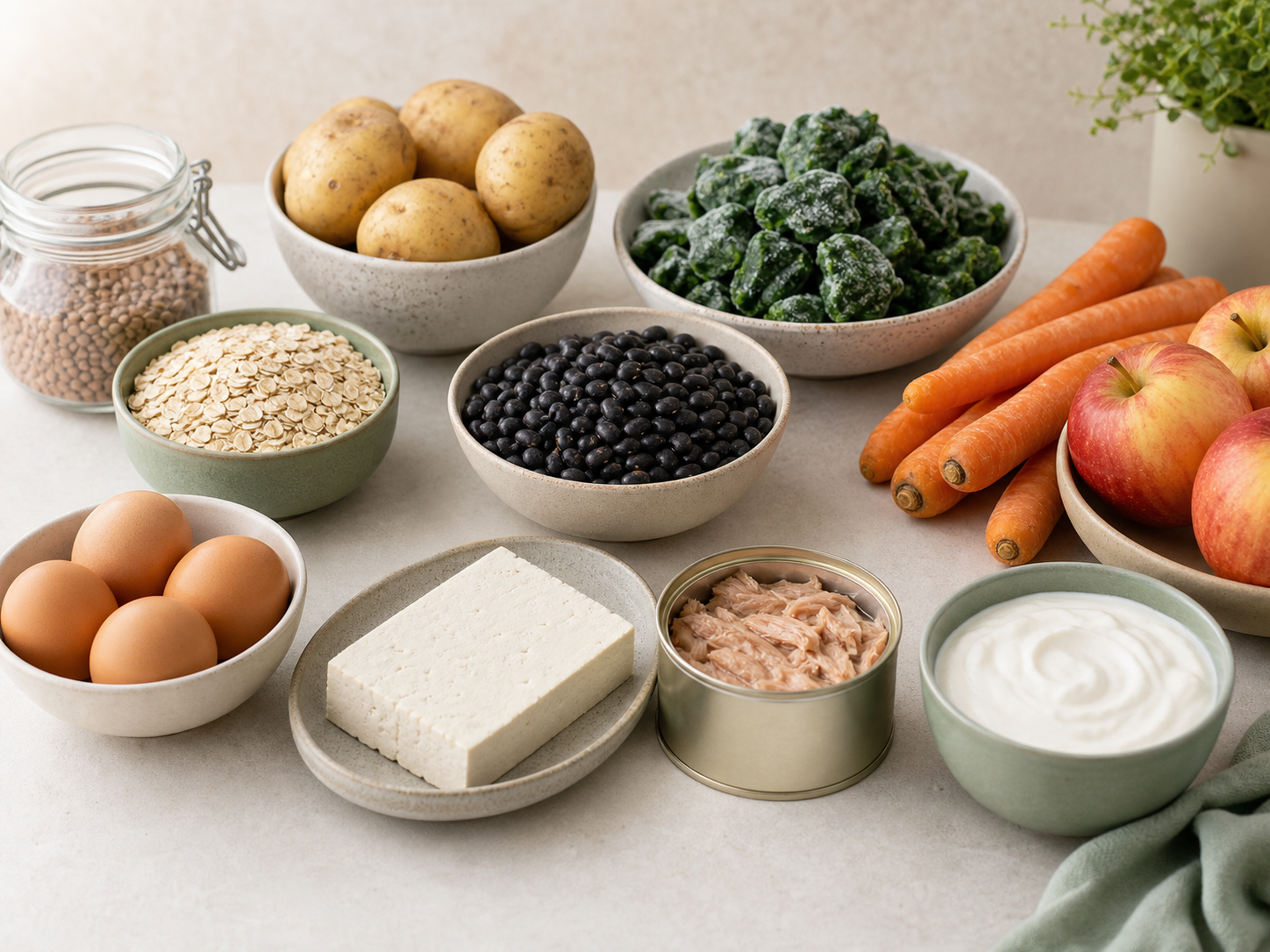
Eggs can become breakfast, rice bowls, quick dinners, or snacks. Beans and lentils are cheap, filling, and flexible. Canned tuna or salmon can save lunch. Tofu is often less expensive than meat and takes whatever sauce you give it. Plain Greek yogurt can cover breakfast, snacks, and sauces. Chicken thighs are usually cheaper than chicken breast and still work beautifully in sheet-pan meals, soups, tacos, and bowls.
Add fiber with foods that do not spoil instantly
Fiber is one of the most budget-friendly upgrades because many high-fiber foods are pantry or freezer staples. Oats, beans, lentils, potatoes, carrots, cabbage, frozen vegetables, apples, and whole grains are not usually the loudest foods on the shelf, but they make meals more satisfying.
Frozen vegetables deserve special respect. They last longer, reduce waste, and can be thrown into eggs, soup, pasta, rice bowls, and skillet meals. A fresh vegetable that spoils is expensive. A frozen vegetable that gets eaten is doing real work.
A practical healthy grocery list on a budget
Prices vary by city, store, season, and household size, so treat this as a structure rather than a perfect dollar amount. The goal is to build several breakfasts, lunches, dinners, and snacks from overlapping foods.
- Protein: eggs, dry or canned beans, lentils, tofu, canned tuna, plain Greek yogurt, chicken thighs.
- Fiber and produce: oats, frozen broccoli or mixed vegetables, cabbage, carrots, potatoes, apples, bananas.
- Meal connectors: rice, tortillas, pasta, whole-grain bread, tomato sauce, salsa.
- Flavor: garlic powder, chili powder, soy sauce, mustard, hot sauce, vinegar.
- Snacks: popcorn kernels, peanut butter, yogurt, fruit, hummus, or cheese sticks.
The best budget grocery list is not the cheapest possible list. It is the cheapest list you will actually cook, eat, and repeat.
What not to overbuy when money is tight
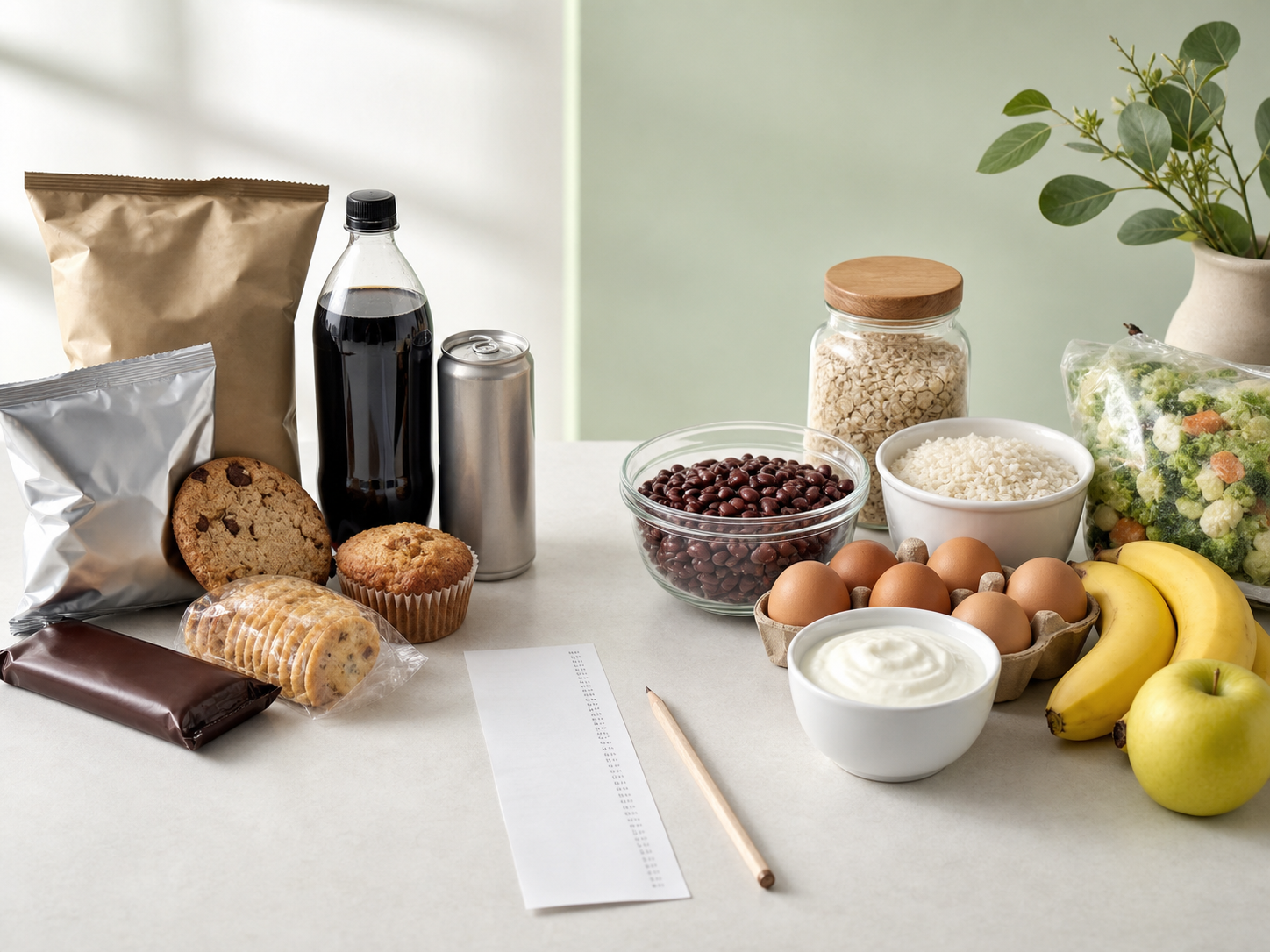
Budget healthy shopping gets easier when you stop buying items that look helpful but do not solve meals. Watch for duplicate snacks, sweet drinks, specialty bars, single-serve "better-for-you" treats, and random sauces that do not connect to a meal plan. None of these are illegal. They just deserve a smaller seat in the cart when groceries feel expensive.
The FDA explains that added sugars are sugars added during processing or packaging, and the Daily Value for added sugars is 50 grams per day based on a 2,000 calorie diet. The Percent Daily Value guide is also useful: 5 percent DV or less is low, while 20 percent DV or more is high. If the receipt has soda, cookies, sweet cereal, dessert yogurt, and sweet coffee drinks in the same trip, that is not one treat. It is a budget leak and a sugar pileup.
Budget swaps that actually feel normal
Good swaps should be boring enough to repeat. If the replacement requires a new personality, it is not a strategy. Use swaps that preserve the job of the food.
- Swap sweet cereal for oats with banana, peanut butter, cinnamon, or yogurt.
- Swap deli-counter lunch panic for tuna, beans, tortillas, and bagged slaw.
- Swap one soda pack for sparkling water, unsweetened tea, or a smaller pack of the drink you love most.
- Swap single-serve snack packs for popcorn kernels, fruit, yogurt, or peanut butter toast.
- Swap "random vegetable optimism" for frozen vegetables you already know how to cook.
Use your receipt as a budget coach
After checkout, read the receipt in two minutes. This is where GoalCart's way of thinking becomes useful: scan the whole grocery haul, not every bite of food.
- Circle protein: Count the items that can anchor meals or filling snacks.
- Underline fiber: Mark oats, beans, lentils, fruits, vegetables, potatoes, and whole grains.
- Box meal connectors: Find rice, tortillas, pasta, bread, sauces, and frozen vegetables.
- Star budget leaks: Notice duplicate snacks, sweet drinks, and expensive wellness extras.
- Name three meals: If you cannot name them, the next trip needs connectors before more snacks.
This method keeps the conversation practical. You are not asking, "Was I perfect?" You are asking, "Will this cart feed me well enough until the next trip?"
Example: turning a weak cart into a useful cart
Suppose the receipt says: yogurt, granola bars, soda, cookies, lettuce, chicken, and blueberries. There are good items here, but the cart is fragile. It has protein from chicken and yogurt. It has some fruit. But it is missing cheap meal structure.
The fix is not to throw everything out. Add rice or potatoes, frozen vegetables, beans or lentils, and a sauce you enjoy. Now the same cart can become chicken bowls, yogurt breakfasts, fruit snacks, and bean-based lunches. The budget improves because more of the receipt turns into meals.
How GoalCart can help over time
One receipt is useful. Saved receipts are better. When you keep grocery history by date, you can see whether the same patterns keep showing up: low protein weeks, low fiber weeks, too many sweet drinks, or snacks that crowd out dinners. That history turns "I should shop better" into a specific next step.
GoalCart is built for that. Scan a receipt or paste a grocery list, choose a goal like budget healthy, high protein, high fiber, low sugar, or weight loss, and review the extracted text. GoalCart analyzes the cart and saves the result so you can look back at what you bought, what the receipt said, and what swaps were recommended.
Bottom line
Healthy budget shopping is not a luxury version of dieting. It is a cart that spends first on useful food: protein anchors, fiber staples, meal connectors, low-waste produce, and a few snacks you actually like. Buy less of what does not become meals. Buy more of what makes tomorrow easier. Then let the receipt show you the next small improvement.
Frequently asked questions
What should I buy for a healthy grocery list on a budget?
Start with affordable protein, fiber-rich staples, low-cost fruits and vegetables, meal connectors, and one or two satisfying snacks. Eggs, beans, lentils, oats, potatoes, rice, frozen vegetables, apples, canned fish, tofu, and plain yogurt are useful budget staples.
How can I eat healthier without spending more?
Spend first on foods that become meals: protein anchors, fiber staples, vegetables, fruit, and simple carbohydrates like rice, oats, potatoes, or tortillas. Reduce duplicate snacks, sugary drinks, and expensive wellness products that do not help you make meals.
Are frozen vegetables healthy and budget friendly?
Yes. Frozen vegetables can be a practical budget choice because they last longer, reduce food waste, and quickly add fiber and volume to meals.
Medical note: GoalCart provides general grocery-pattern insights only. If you have diabetes, kidney disease, pregnancy-related nutrition needs, an eating disorder history, food allergies, a prescribed diet, or GLP-1 medication questions, ask a qualified clinician or registered dietitian for personal guidance.
Sources
- USDA MyPlate: Healthy Eating on a Budget for budget shopping and meal planning guidance.
- USDA MyPlate for food group framing.
- FDA: Added Sugars on the Nutrition Facts Label for added sugar definitions and Daily Value guidance.
- FDA: Daily Value on the Nutrition and Supplement Facts Labels for how Percent Daily Value works.