Quick answer: A high fiber grocery list should start with repeatable foods: beans, lentils, oats, berries, apples, pears, potatoes with skin, sweet potatoes, carrots, broccoli, cabbage, frozen vegetables, whole-grain bread, brown rice, barley, chia seeds, popcorn, nuts, and seeds. Add them gradually and pair them with fluids and meals you already eat.
Fiber is one of the least glamorous grocery upgrades, which is unfair because it does a lot of practical work. It helps meals feel more complete, gives snacks more staying power, and often comes from foods that are cheap, normal, and easy to keep around.
The trick is not to buy one heroic bag of kale and hope it fixes your life. The trick is to build a cart with fiber in several places: breakfast, lunch, dinner, and snacks. A receipt makes that visible. It shows whether fiber is actually built into the week or just appearing as a decorative apple near the checkout total.
The high fiber cart formula
FDA lists 28 grams as the Daily Value for dietary fiber based on a 2,000 calorie diet. You do not need to turn the grocery store into a math contest, but the number explains why one lonely vegetable may not carry the whole week. High-fiber shopping works better when several normal foods share the job.
| Cart job | Useful grocery examples | Receipt question |
|---|---|---|
| Breakfast fiber | Oats, berries, apples, pears, chia seeds, whole-grain toast, higher-fiber cereal. | Can breakfast include fiber without becoming complicated? |
| Lunch support | Beans, lentils, cabbage, carrots, whole-grain bread, tortillas, brown rice, barley. | Can lunch become filling without relying only on snacks? |
| Dinner volume | Frozen vegetables, broccoli, potatoes with skin, sweet potatoes, beans, lentils, whole grains. | Do dinners have a fiber food that pairs with protein? |
| Snack defaults | Fruit, popcorn, hummus, vegetables, nuts, seeds, whole-grain crackers, peanut butter. | Will snacks help me reach the next meal? |
| Gradual upgrades | Add one bean meal, one oat breakfast, one fruit snack, or one frozen vegetable default. | Is this increase small enough to repeat comfortably? |
Start with the fiber foods you will repeat
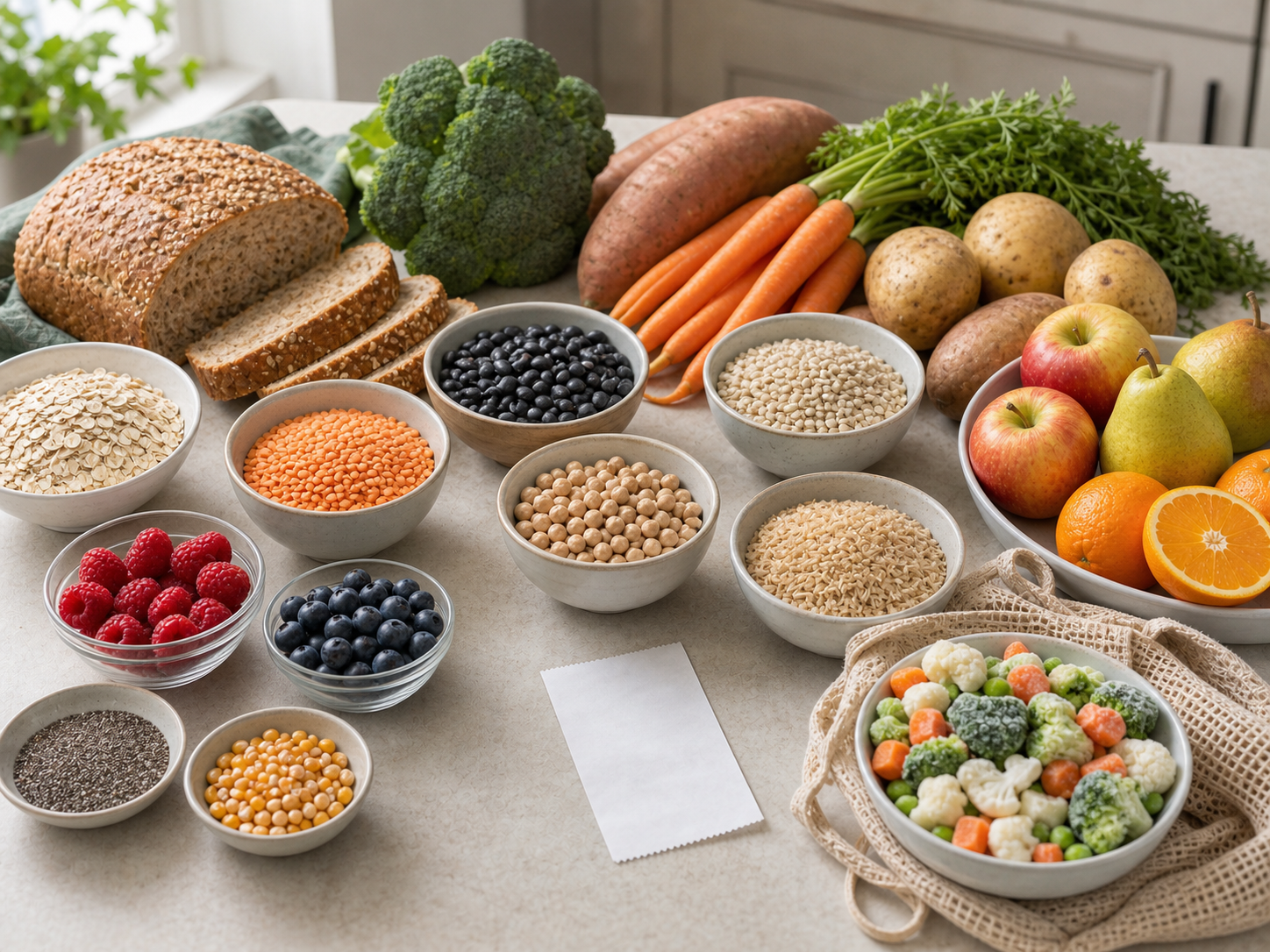
The best high-fiber grocery list is boring in a useful way. Oats for breakfast. Beans for bowls. Lentils for soup. Apples for snacks. Frozen vegetables for dinner. Potatoes with skin when you want a filling base. Popcorn when you want crunch. These are not specialty foods. That is the point.
USDA MyPlate organizes healthy eating around food groups like fruits, vegetables, grains, protein foods, and dairy or fortified alternatives. For fiber, that frame is helpful because the cart does not need one magic food. It needs more plants and whole grains in places you can actually use them.
Use budget fiber before buying wellness extras
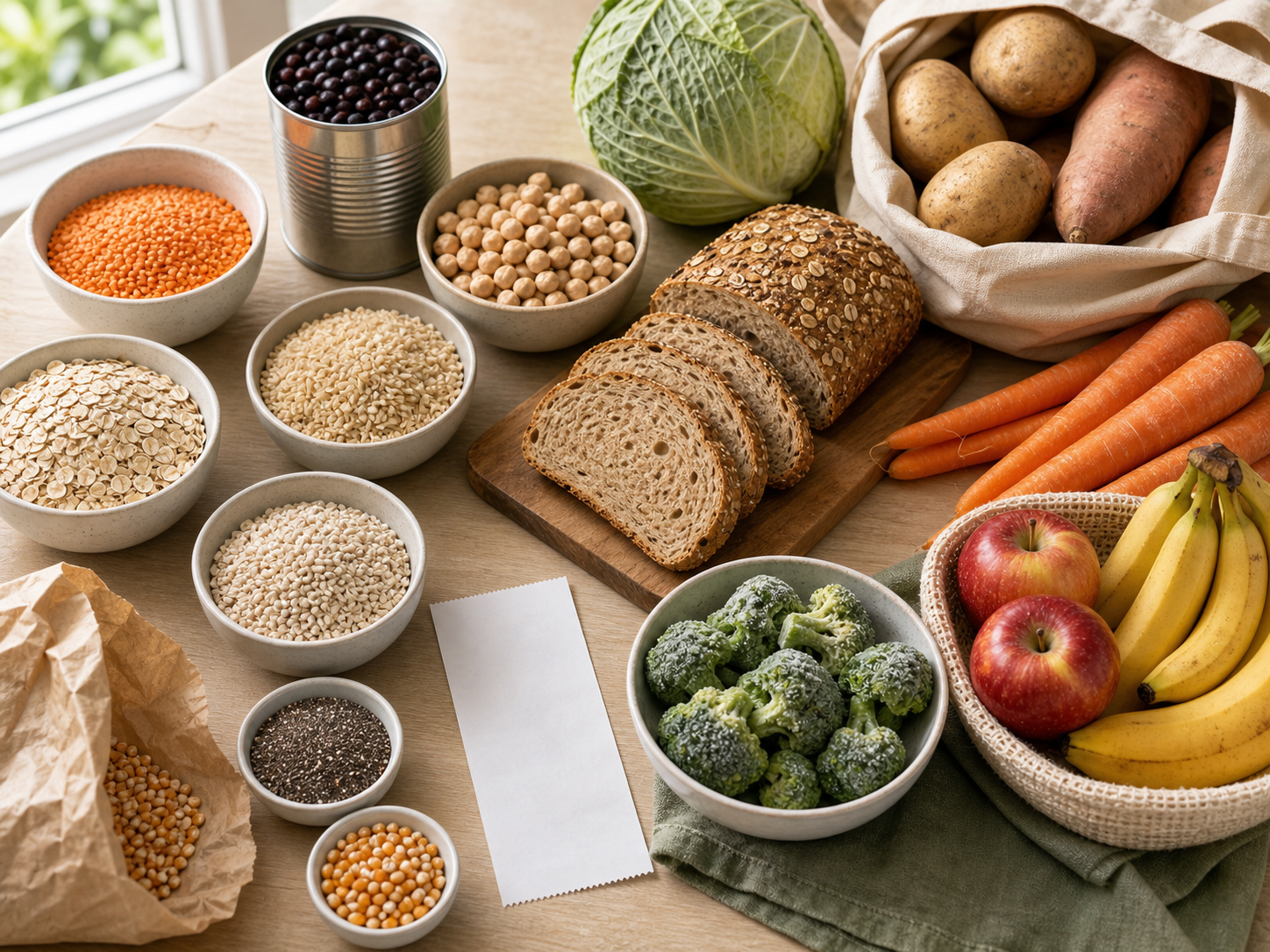
Fiber is one of the few nutrition upgrades that can be genuinely budget-friendly. Dry lentils, canned beans, oats, potatoes, carrots, cabbage, brown rice, barley, apples, bananas, frozen broccoli, popcorn kernels, and whole-grain bread can do a lot of work without turning the receipt into a wellness boutique invoice.
The most reliable approach is to buy fiber foods that connect to meals you already know. Lentils into soup. Beans into tacos or bowls. Oats into breakfast. Frozen vegetables into eggs, rice, pasta, or stir-fry. Fruit into snacks. A food that gets eaten beats a fancy fiber product that waits politely in the pantry forever.
Increase fiber like a dimmer switch
A high-fiber cart can backfire if you go from almost none to bean festival overnight. Many people do better increasing fiber gradually and drinking enough fluids. The goal is not to shock your gut into becoming a different department. The goal is to make the next week a little more fiber-supported than the last one.
Start with one lane: breakfast oats, fruit snacks, beans at lunch, or frozen vegetables at dinner. Repeat it. Then add another lane. If you have irritable bowel syndrome, inflammatory bowel disease, kidney disease, diabetes, a prescribed diet, medication concerns, or recent surgery, ask a clinician or registered dietitian before making a major change.
Build fiber snacks that are easy to reach
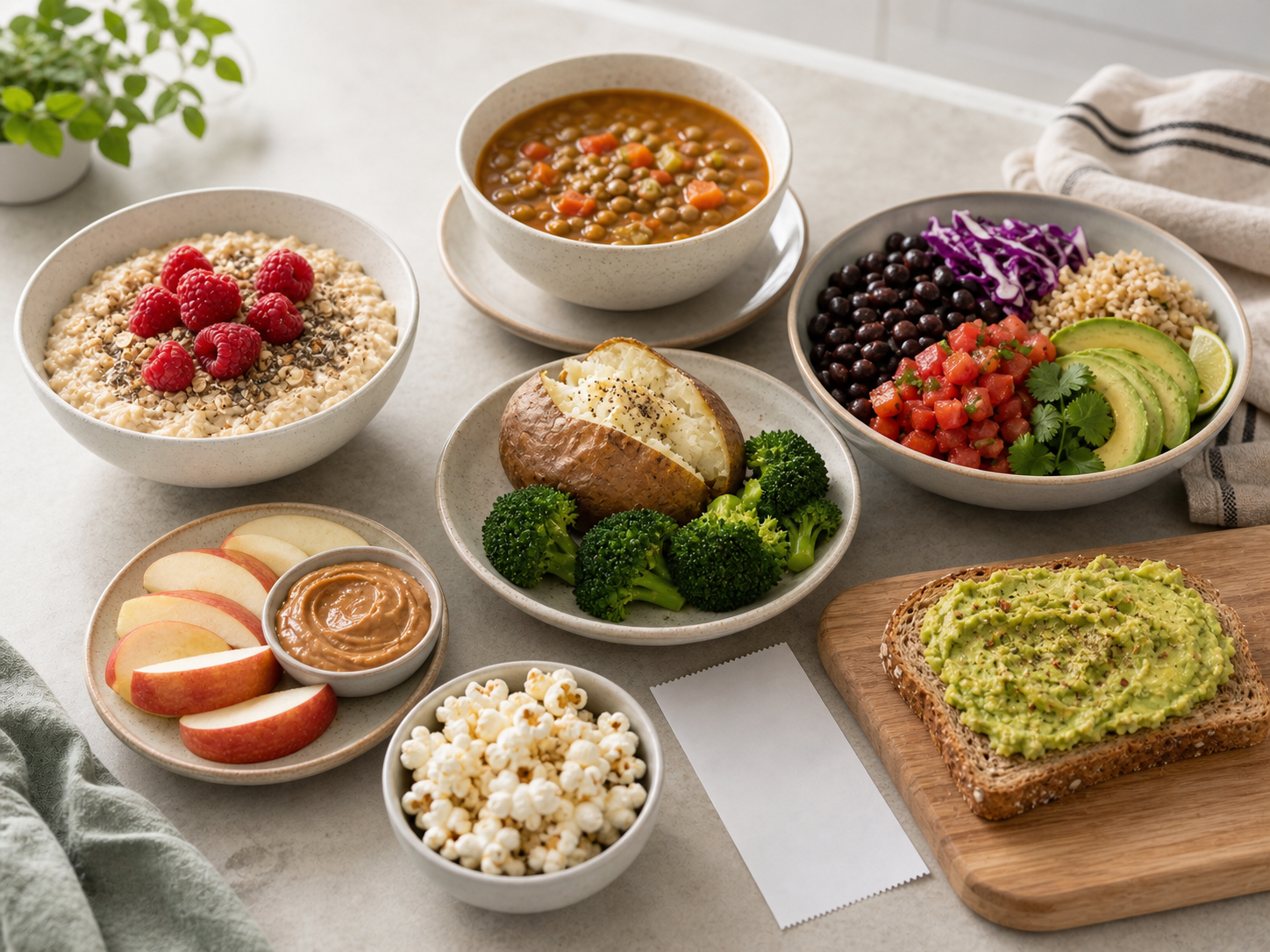
Snacks are where fiber can quietly help. Fruit, popcorn, hummus with vegetables, whole-grain crackers, peanut butter on apple slices, nuts, seeds, and yogurt with berries can all make snack time more useful.
- Apple slices + peanut butter.
- Popcorn + a protein food if you need more staying power.
- Hummus + carrots or whole-grain crackers.
- Greek yogurt + berries + chia seeds.
- Whole-grain toast + avocado.
- Black bean bowl leftovers as a tiny lunch-snack hybrid.
The snack should have a job. If it gives crunch, sweetness, or convenience and also brings fiber, that is a better default than a snack that makes you want another snack seven minutes later.
A practical high fiber grocery list
Use this as a structure, not a prescription. Your personal needs can vary by medical history, digestive tolerance, medication use, allergies, and clinician guidance.
- Breakfast: oats, berries, apples, pears, chia seeds, whole-grain toast, higher-fiber cereal.
- Lunch: beans, lentils, whole-grain bread, tortillas, cabbage, carrots, brown rice, barley.
- Dinner: frozen vegetables, broccoli, potatoes with skin, sweet potatoes, beans, lentils, whole grains.
- Snacks: fruit, popcorn, hummus, vegetables, nuts, seeds, peanut butter, whole-grain crackers.
- Connectors: salsa, tomato sauce, soup broth, rice, tortillas, lemon juice, vinegar, herbs, spices.
A useful high-fiber grocery list should answer this question: where will fiber show up before dinner panic starts?
The 2-minute high fiber receipt method
After checkout, read the receipt like a fiber map. You are not looking for perfection. You are looking for repeatable places where fiber enters the week.
- Circle beans and lentils: canned, dry, frozen, soups, bowls, or hummus.
- Underline fruit and vegetables: fresh, frozen, canned without syrup, or snack-ready.
- Box whole grains: oats, whole-grain bread, brown rice, barley, higher-fiber cereal.
- Mark snack defaults: fruit, popcorn, hummus, nuts, seeds, whole-grain crackers.
- Name four fiber moments: breakfast, lunch, dinner, snack. If one is missing, add a default next trip.
Example: fixing a low-fiber receipt
Imagine the receipt says: chicken, yogurt, chips, white bread, soda, lettuce, and grapes. There are useful foods here, but the fiber pattern is thin. Lettuce and grapes help, but they are carrying too much of the cart.
A better next trip might add oats, beans, potatoes, frozen broccoli, apples, popcorn kernels, and whole-grain bread. Now breakfast, lunch, dinner, and snacks all have a fiber path. Same shopper, stronger receipt.
How GoalCart can help
GoalCart is built around this receipt-first idea. Paste a grocery list or scan a receipt, choose a goal like high fiber, high protein, low sugar, GLP-1 friendly, weight loss, or budget healthy, and review the extracted items.
The report can flag fiber support, protein support, sugar risk, processed-food load, and practical next-trip swaps. Saved history makes the pattern easier to see: fiber keeps disappearing from breakfast, vegetables are strong but beans never show up, or snacks are low-fiber and not doing much work.
Bottom line
A high fiber grocery list should make normal meals sturdier. Buy foods you can repeat: oats, beans, lentils, fruit, vegetables, potatoes, whole grains, popcorn, nuts, and seeds. Add them gradually. Then let the receipt show whether fiber is actually built into the week.
Frequently asked questions
What should I buy for a high fiber grocery list?
Start with beans, lentils, oats, berries, apples, pears, potatoes with skin, sweet potatoes, carrots, broccoli, cabbage, frozen vegetables, whole-grain bread, brown rice, barley, chia seeds, popcorn, and nuts or seeds.
What is the easiest way to add more fiber to groceries?
Add one repeatable fiber food to each meal slot: oats or berries for breakfast, beans or lentils for lunch, vegetables or potatoes for dinner, and fruit, popcorn, or hummus for snacks.
Should I increase fiber quickly?
Most people do better increasing fiber gradually and drinking enough fluids. People with digestive conditions, prescribed diets, kidney disease, or medication concerns should follow clinician guidance.
Medical note: GoalCart provides general grocery-pattern insights only. If you have digestive conditions, kidney disease, diabetes, pregnancy-related nutrition needs, an eating disorder history, food allergies, a prescribed diet, recent surgery, or medication questions, ask a qualified clinician or registered dietitian before changing your diet.
Sources
- FDA: Daily Value on the Nutrition and Supplement Facts Labels for Daily Value guidance, including dietary fiber.
- USDA MyPlate for food group framing.
- Dietary Guidelines for Americans for general U.S. dietary guidance.
- CDC: Be Sugar Smart for practical food pattern guidance used alongside lower-sugar, higher-fiber shopping.