Quick answer: A high protein grocery list should start with easy protein anchors, then pair them with fiber foods and meal connectors. Eggs, Greek yogurt, cottage cheese, tofu, fish, chicken, turkey, beans, lentils, tuna, edamame, milk, soy milk, and practical frozen meals can help a grocery haul become filling meals instead of a fridge full of side quests.
Protein is one of those grocery words that somehow got both useful and annoying. Useful because protein can make meals more satisfying. Annoying because every snack package now wants to introduce itself like it just joined a weight room.
The receipt cuts through the noise. It shows whether you bought real protein anchors for the week or just a few expensive wrappers with big numbers on the front. A good high-protein cart does not need to be extreme. It needs enough dependable proteins to build meals when you are hungry, busy, tired, or all three in a very unglamorous Tuesday formation.
The high protein cart formula
USDA MyPlate includes protein foods such as seafood, meats, poultry, eggs, beans, peas, lentils, nuts, seeds, and soy products. The Academy of Nutrition and Dietetics also frames protein as a broad food group, from meat, poultry, and seafood to beans, lentils, and soy foods. In grocery terms, that means variety is a feature, not a bonus round.
| Cart job | Useful grocery examples | Receipt question |
|---|---|---|
| Breakfast protein | Eggs, Greek yogurt, cottage cheese, milk, soy milk, tofu scramble, turkey slices. | Can breakfast happen without relying on sweet cereal alone? |
| Lunch anchors | Tuna, salmon, chicken, turkey, tofu, beans, lentils, edamame, cottage cheese. | Can I build two or three lunches without ordering something? |
| Dinner proteins | Chicken, fish, lean meat, tofu, tempeh, eggs, beans, lentils, frozen protein-rich entrees. | Do I have a protein that pairs with rice, potatoes, pasta, tortillas, or vegetables? |
| Protein snacks | Greek yogurt, cottage cheese, boiled eggs, hummus, edamame, tuna packets, cheese, nuts. | Will snacks help me reach the next meal, or just make me want another snack? |
| Fiber pairings | Beans, lentils, berries, oats, potatoes, fruit, frozen vegetables, whole grains. | Did I buy the foods that make protein feel like a complete meal? |
Start with protein anchors, not protein decorations
A protein anchor is a food that can carry part of a meal. Chicken is an anchor. Eggs are anchors. Greek yogurt can be an anchor. Tofu, beans, lentils, fish, turkey, cottage cheese, and tuna can all anchor meals. A dusting of protein in a cookie-shaped snack is not usually doing the same job.
FDA notes that protein generally does not have a Percent Daily Value listed on most Nutrition Facts labels, so grams can be useful for comparison. But the better receipt question is even simpler: "What meals can this protein become?" If you cannot answer, the cart may have protein numbers without protein usefulness.
Use budget proteins before expensive protein products
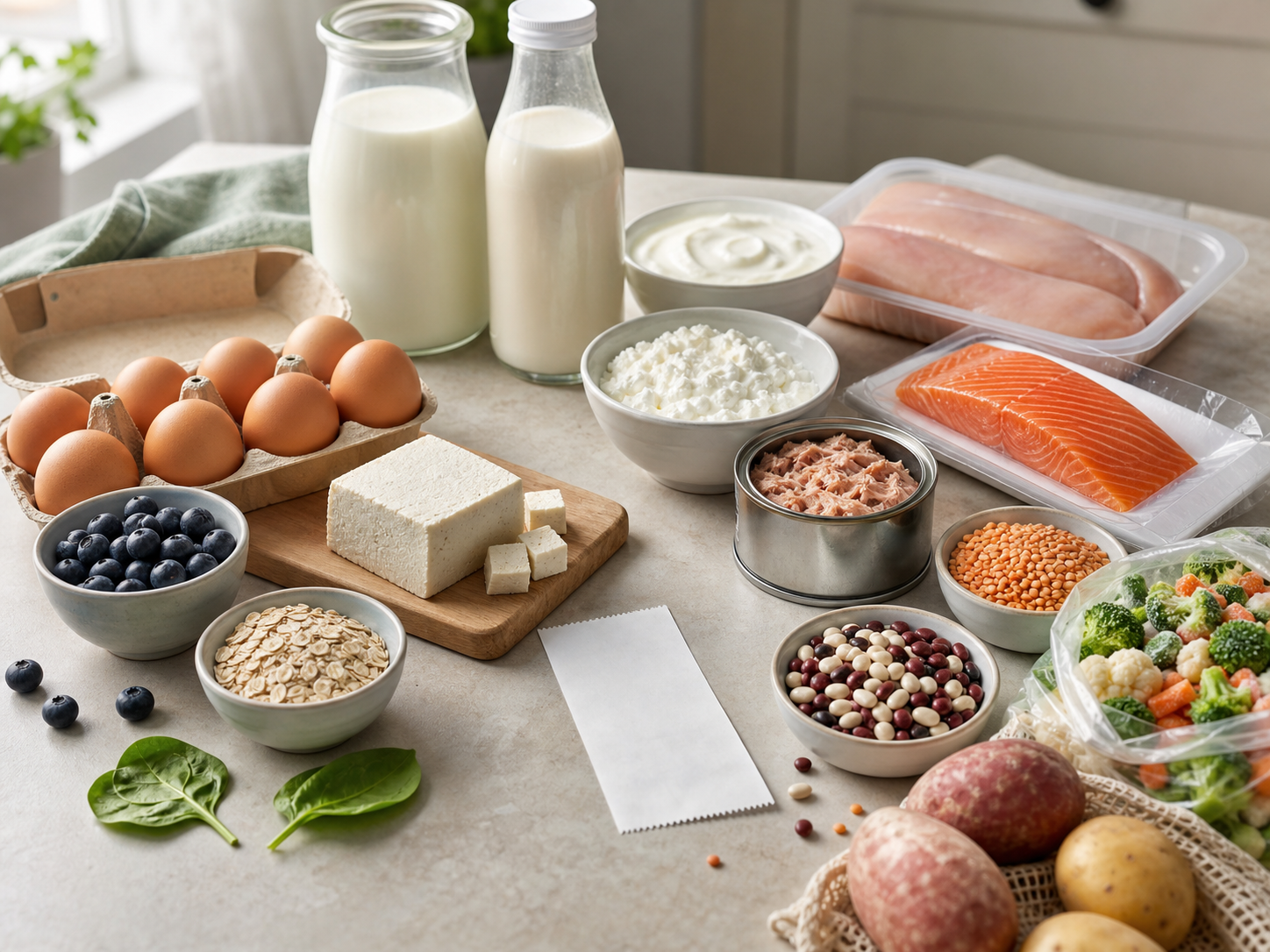
High protein does not have to mean high receipt drama. Eggs, beans, lentils, canned tuna, tofu, plain Greek yogurt, cottage cheese, chicken thighs, milk, soy milk, and frozen edamame can do a lot of work without turning every snack into a premium bar.
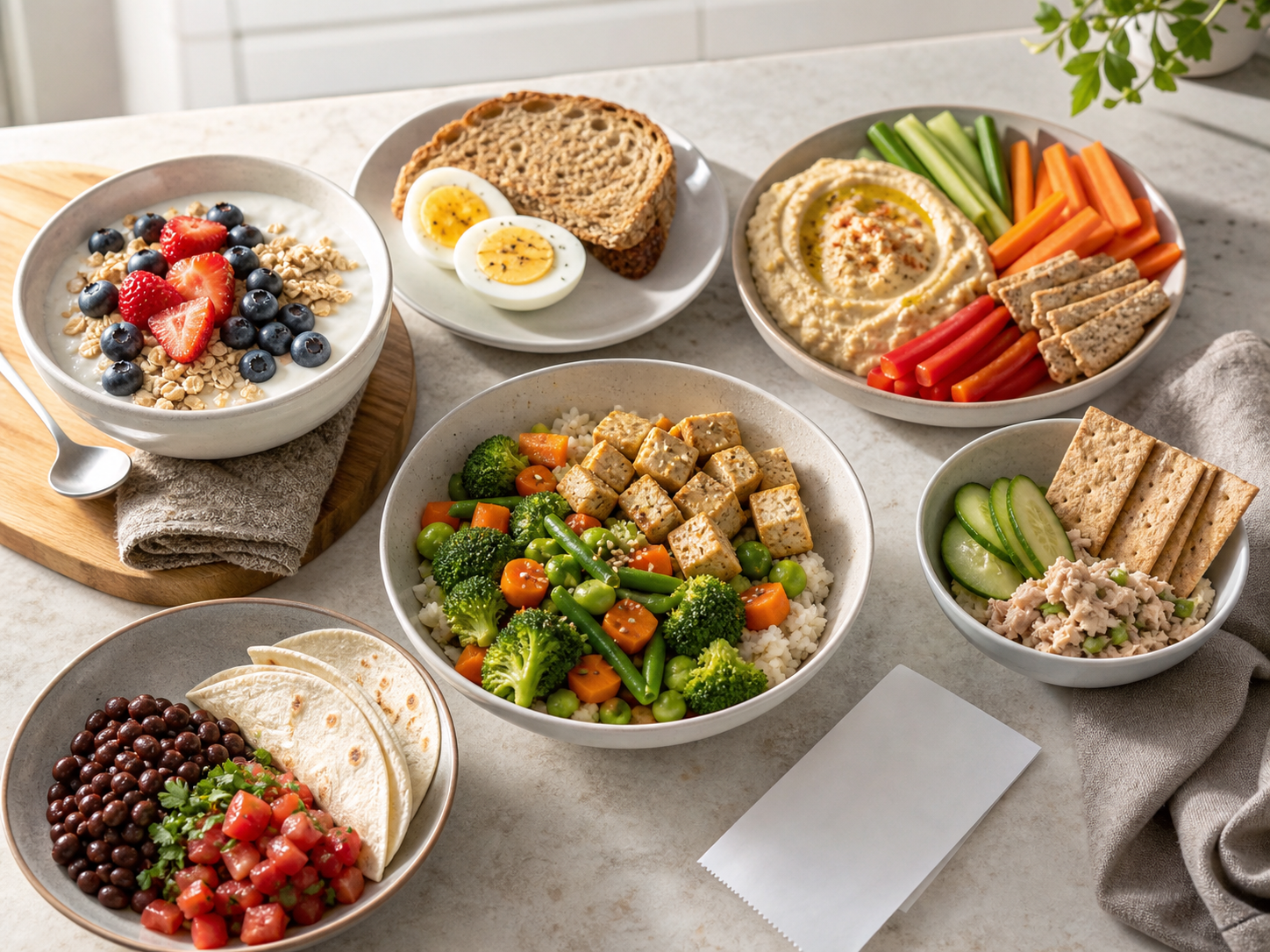
The key is to buy foods you can repeat. Beans plus rice and salsa. Eggs plus potatoes and spinach. Yogurt plus berries and oats. Tofu plus frozen vegetables and noodles. Tuna plus crackers and cucumbers. These are not glamorous. They are repeatable, which is better than glamorous on most Wednesdays.
Pair protein with fiber so meals actually feel like meals
Protein helps, but protein alone can still feel strangely incomplete. A plain chicken breast eaten over the sink may contain protein, but spiritually it is a cry for help. Add fiber and a connector: vegetables, fruit, beans, lentils, oats, potatoes, whole grains, rice, tortillas, or pasta.
Beans and lentils deserve special respect because they bring both protein and fiber. They may not be as protein-dense as meat, fish, eggs, or Greek yogurt per serving, but they make meals more filling and often cost less. A cart with beans, rice, salsa, eggs, yogurt, and frozen vegetables has more meal potential than a cart with three protein bars and optimism.
Build protein snacks that are not just expensive candy
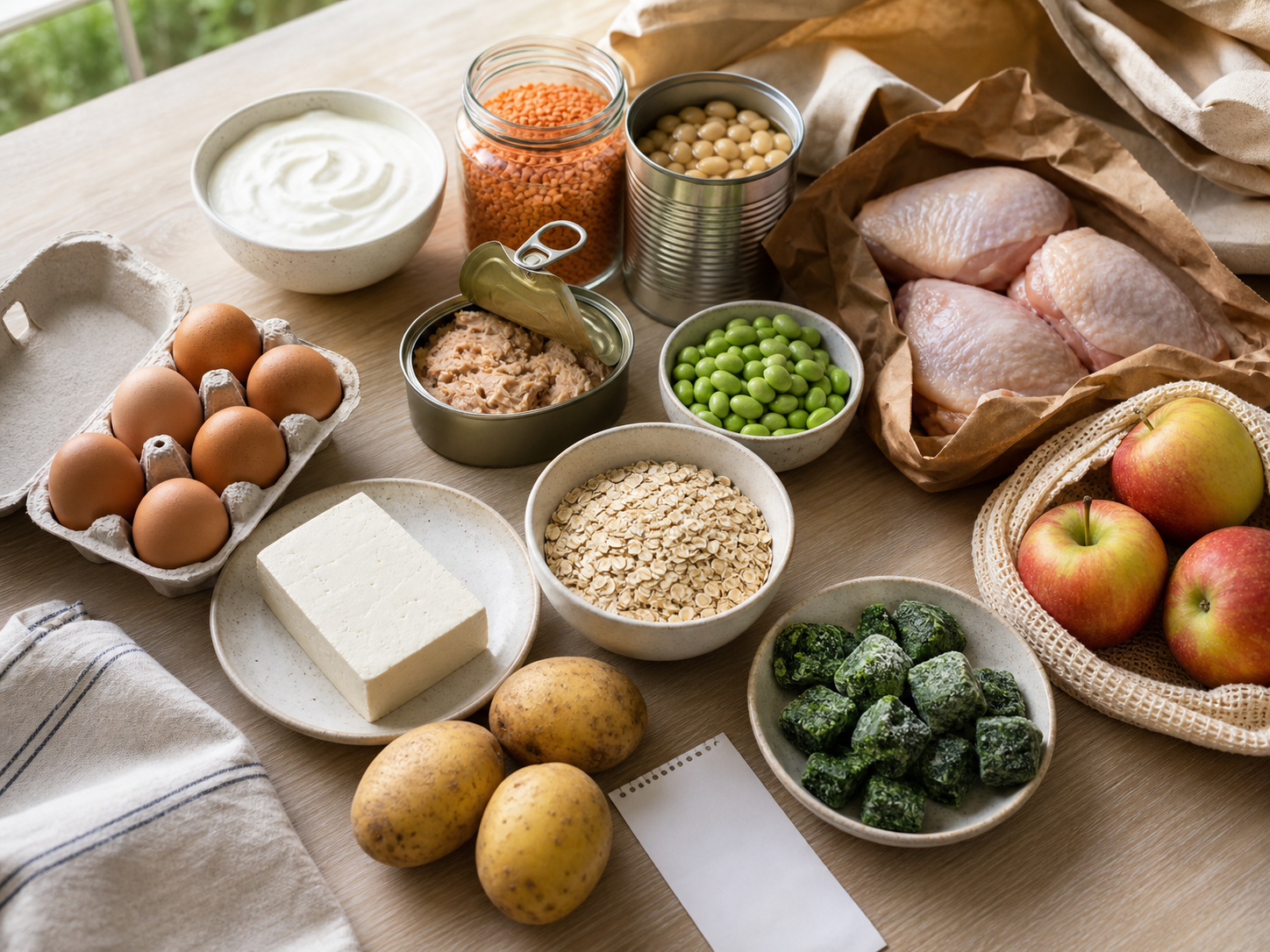
Protein snacks can be useful, but the snack aisle knows how to put a very serious number on a very sweet product. Check the whole pattern: protein, added sugar, fiber, serving size, and whether the snack actually keeps you satisfied.
- Greek yogurt + berries.
- Cottage cheese + fruit or tomatoes.
- Boiled eggs + whole-grain toast.
- Hummus + vegetables or crackers.
- Tuna packet + crackers or cucumber.
- Edamame + fruit.
Packaged protein bars are not illegal. They are just not the whole strategy. If the receipt has five bars and no dinner protein, the cart is asking a snack to do a meal's job.
A practical high protein grocery list
Use this as a structure, not a prescription. Your personal protein needs can vary by age, body size, activity, pregnancy, medical conditions, medications, kidney disease, eating disorder history, and clinician guidance.
- Breakfast: eggs, Greek yogurt, cottage cheese, milk, soy milk, tofu, turkey slices.
- Lunch: canned tuna, canned salmon, chicken, turkey, tofu, beans, lentils, edamame.
- Dinner: chicken, fish, lean meat, tofu, tempeh, eggs, beans, lentils, protein-rich frozen meals.
- Fiber pairings: oats, berries, apples, potatoes, frozen vegetables, beans, lentils, whole grains.
- Connectors: rice, tortillas, pasta, bread, salsa, tomato sauce, soup, frozen vegetables.
- Snacks: yogurt, cottage cheese, boiled eggs, hummus, cheese, nuts, tuna packets, edamame.
A high-protein grocery list should answer one plain question: what will I eat this protein with when I am tired?
The 2-minute high protein receipt method
After checkout, read the receipt like a meal map. You are looking for anchors, not perfection.
- Circle protein anchors: eggs, yogurt, cottage cheese, fish, chicken, tofu, beans, lentils, tuna, turkey.
- Mark snack proteins: yogurt cups, boiled eggs, hummus, edamame, tuna packets, cheese, nuts.
- Underline fiber pairings: fruit, vegetables, oats, beans, lentils, potatoes, whole grains.
- Box meal connectors: rice, tortillas, pasta, bread, sauces, soup, frozen vegetables.
- Name four meals: If you cannot name them, add connectors before buying more protein snacks.
Example: fixing a weak high protein receipt
Imagine the receipt says: protein bars, lettuce, berries, soda, chips, and chicken. There is protein, but the cart is fragile. The chicken can become dinner, but there is not much for breakfast, lunch, or snacks. The bars are trying to cover too many jobs.
A better next trip might add eggs, Greek yogurt, beans or lentils, rice or potatoes, frozen vegetables, and a simple sauce. Now breakfast, lunch, dinner, and snacks all have a protein path. The goal is not more protein noise. It is more protein usefulness.
How GoalCart can help
GoalCart is built for this receipt-first way of thinking. Paste a grocery list or scan a receipt, choose a goal like high protein, high fiber, low sugar, GLP-1 friendly, weight loss, or budget healthy, and review the extracted items.
The report can flag protein support, fiber support, sugar risk, processed-food load, and practical next-trip swaps. Saved history makes the pattern easier to see: breakfast protein keeps disappearing, snack protein is carrying too much of the week, or dinner anchors are strong but fiber pairings are thin.
Bottom line
A high protein grocery list should make normal meals easier. Buy protein anchors you can actually use, pair them with fiber and meal connectors, keep a few protein snacks around, and do not let bars replace the whole plan. The receipt will tell you whether protein is really supporting your week or just decorating it.
Frequently asked questions
What should I buy for a high protein grocery list?
Start with easy protein anchors such as eggs, Greek yogurt, cottage cheese, tofu, chicken, fish, turkey, beans, lentils, tuna, edamame, milk, soy milk, and simple frozen meals with enough protein to act as a meal.
How do I make high protein groceries into meals?
Pair protein with a fiber food and a meal connector: Greek yogurt with berries and oats, chicken with rice and frozen vegetables, eggs with potatoes and spinach, tofu with noodles and vegetables, or beans with tortillas and salsa.
Are beans and lentils good for a high protein grocery list?
Yes. Beans and lentils can support protein and fiber at the same time. They may not be as protein-dense as meat, fish, eggs, or Greek yogurt per serving, but they are useful staples for filling meals.
Medical note: GoalCart provides general grocery-pattern insights only. If you have kidney disease, pregnancy-related nutrition needs, an eating disorder history, diabetes, food allergies, a prescribed diet, bariatric surgery history, or medication questions, ask a qualified clinician or registered dietitian before changing your diet.
Sources
- USDA MyPlate: Protein Foods for protein food group examples.
- Academy of Nutrition and Dietetics: Protein Foods for broad protein food group framing.
- FDA: The Lows and Highs of Percent Daily Value on the Nutrition Facts Label for label guidance, including using grams as a guide for protein.
- Dietary Guidelines for Americans for general U.S. dietary guidance.