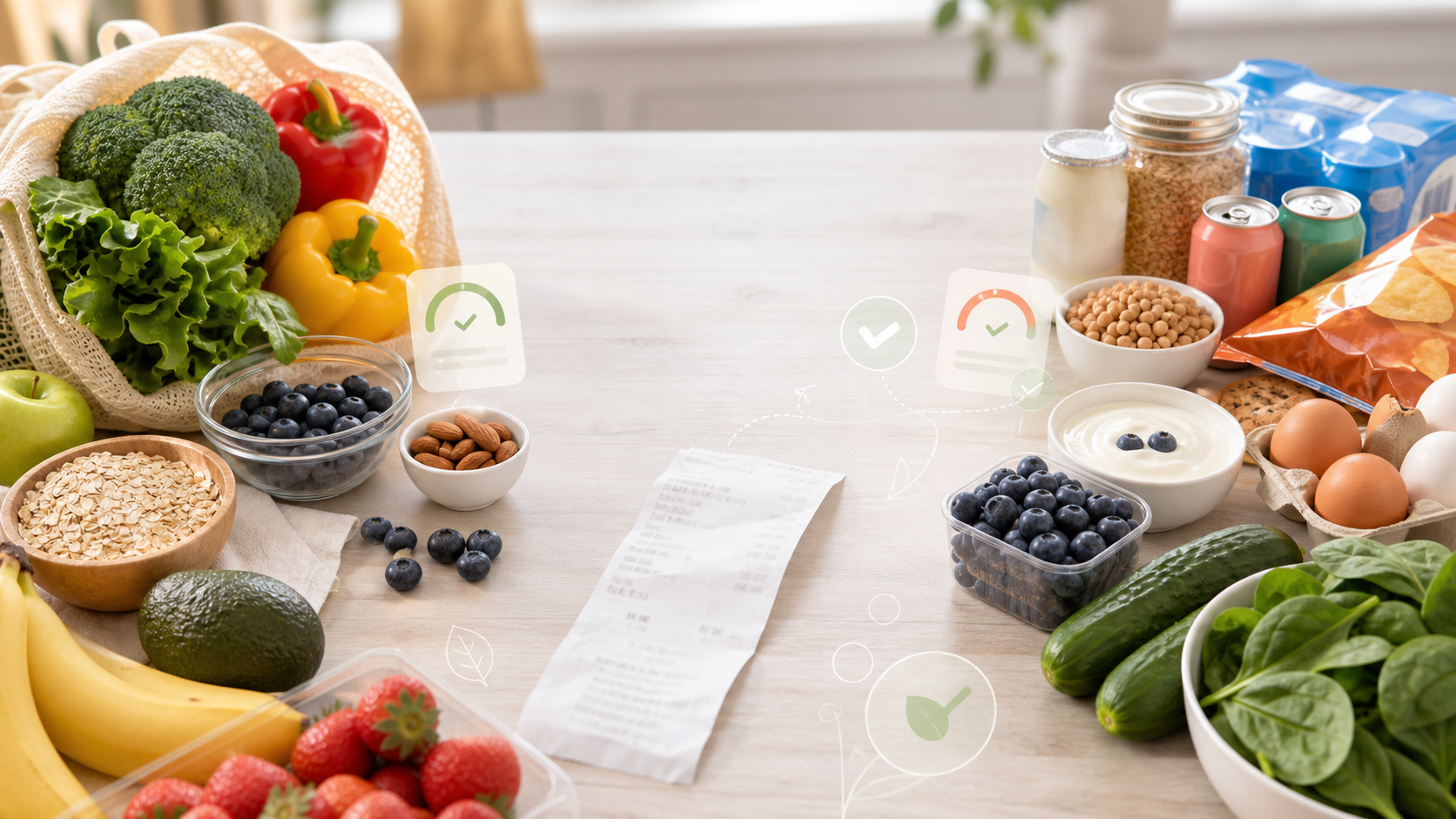
Quick answer: A healthier grocery haul usually has enough protein anchors, several fiber-rich plants or whole grains, a manageable amount of added sugar, fewer heavily processed snack items, and a few ingredients that can turn into simple meals. You can check all of that from a receipt in about two minutes.
Most people do not come home from the store thinking, "Wow, I cannot wait to log every bite of this cucumber." They come home tired, unpack the bags, and hope the cart was "pretty healthy." Then Wednesday arrives, dinner is weird, the snacks are winning, and the lettuce is quietly becoming compost in the back of the fridge.
That is why a grocery receipt is useful. It is not a judgment. It is a little shopping mirror. It shows what you actually bought, not what you meant to buy after watching one very confident meal prep video. If you can read that receipt in a simple way, you can improve your next trip without turning food into a math class.
The 5-part healthy grocery receipt score
Think of your receipt as five small piles. You are not looking for perfection. You are looking for balance. A cart with cookies can still be a useful cart. A cart with spinach can still fail if there is no real meal plan hiding inside it.
| Receipt check | What to look for | Easy win |
|---|---|---|
| Protein anchors | Chicken, eggs, fish, tofu, Greek yogurt, beans, lentils, cottage cheese, lean meat, or protein-rich frozen meals. | Make sure at least two or three meals have a clear protein. |
| Fiber helpers | Vegetables, berries, apples, beans, lentils, oats, whole-grain bread, brown rice, quinoa, potatoes with skin. | Add one fiber food you can eat with almost anything. |
| Added sugar speed bumps | Soda, sweet tea, candy, pastries, sweet cereal, dessert yogurt, sweet coffee drinks, and snack cakes. | Swap one sweet drink for sparkling water or unsweetened tea. |
| Processed-food load | Chips, cookies, frozen fried foods, candy, sugary drinks, and snack packs that are easy to eat without a meal. | Keep the favorite, but reduce the duplicates. |
| Meal usability | Foods that combine into breakfast, lunch, dinner, or a filling snack without a heroic cooking plan. | Buy one "lazy meal" combo before buying more snacks. |
1. Start with protein anchors
Protein is the receipt category that makes a cart feel more like a plan. It gives meals structure. If your receipt has berries, lettuce, crackers, and sparkling water but no protein, you bought ingredients for several dramatic fridge-opening moments.
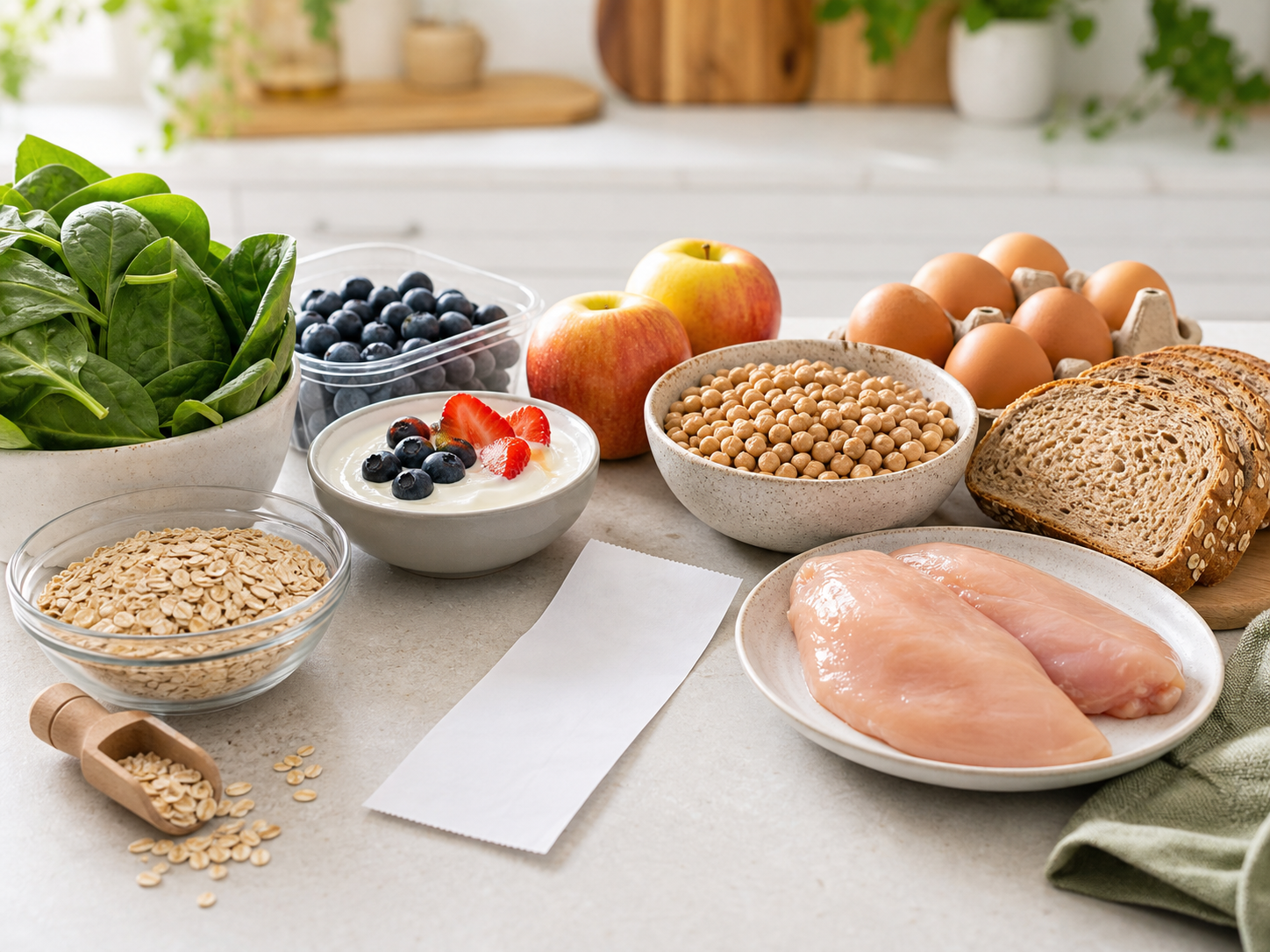
You do not need bodybuilder food. Look for normal anchors: eggs for breakfast, Greek yogurt for snacks, chicken breast for dinner, canned tuna for lunch, tofu for stir-fry, beans for bowls, or cottage cheese when cooking energy is low. A good cart usually has at least two protein anchors that match your real week.
2. Add fiber friends before fancy health foods
Fiber is the unglamorous friend who actually shows up. It often comes from foods that are simple and cheap: oats, beans, lentils, apples, berries, carrots, broccoli, potatoes, whole grains, and leafy greens. USDA MyPlate organizes healthy eating around food groups like fruits, vegetables, grains, protein foods, and dairy, which is a helpful way to think about the cart before worrying about tiny details.
The trick is not to buy the most impressive vegetable. The trick is to buy the vegetable you will actually eat. Frozen broccoli that gets used is better than fresh asparagus that becomes an expensive science project. If your receipt has only one fiber helper, add one more next trip. Oats plus berries. Beans plus rice. Apples plus peanut butter. Boring? Maybe. Useful? Extremely.
3. Treat added sugar like a speed bump, not a moral failure
Sugar gets emotional fast, so keep it practical. FDA explains that added sugars are sugars added during processing or packaging, and the Daily Value for added sugars is 50 grams per day based on a 2,000 calorie diet. FDA also uses the simple Percent Daily Value guide: 5 percent DV or less is low, and 20 percent DV or more is high.
You do not have to ban dessert. A receipt just helps you spot when sweet items are stacking up. Soda plus cookies plus sweet cereal plus dessert yogurt is not one treat. It is a tiny dessert parade. Pick the one or two you truly enjoy, then make the automatic items easier: unsweetened yogurt with berries, sparkling water, or a cereal with less added sugar.
4. Check the processed-food load
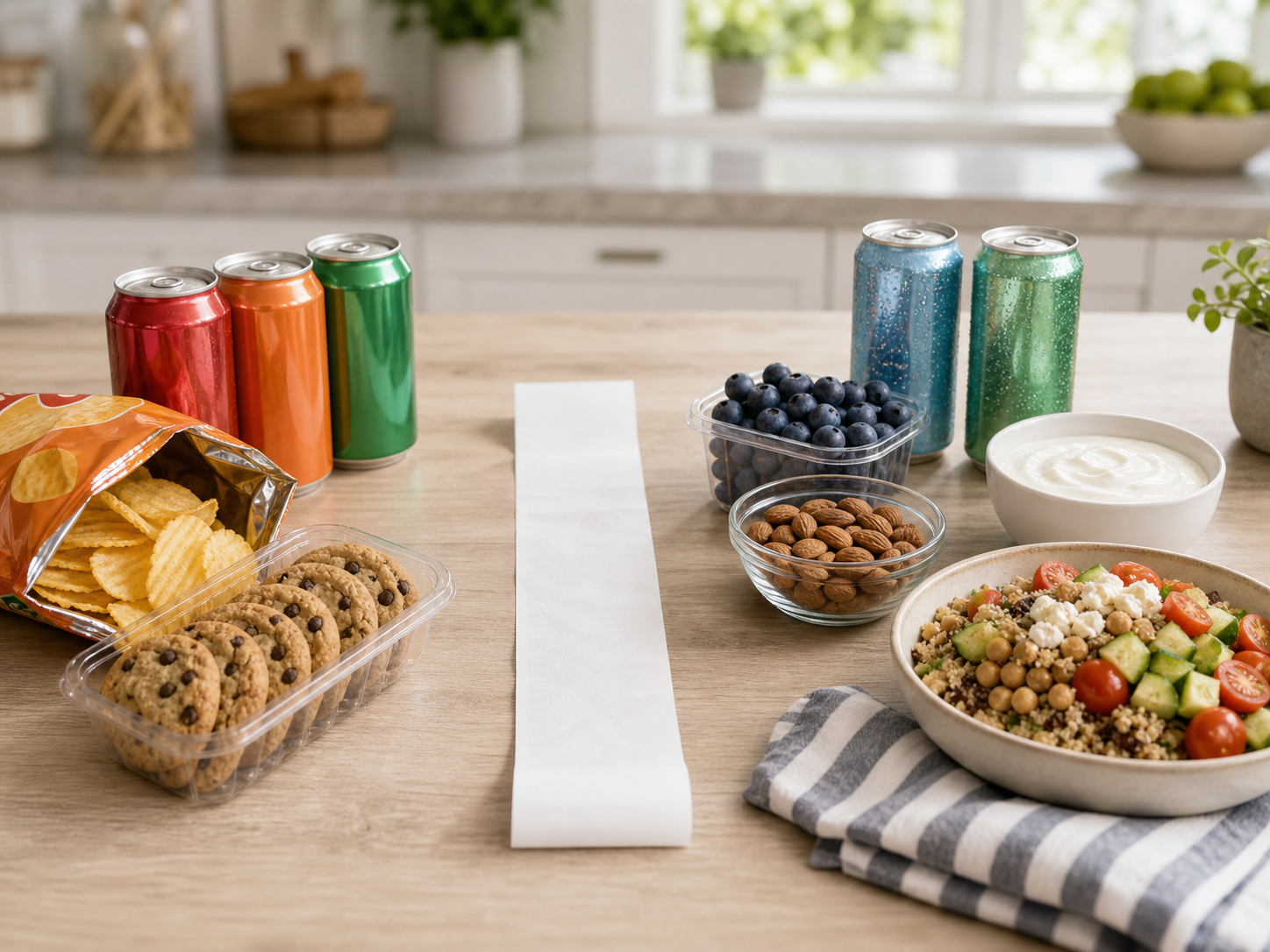
Processed food is not automatically bad. Bagged salad is processed. Frozen vegetables are processed. Canned beans are processed, and they can be fantastic. The receipt problem is the "snack-style processed load": the chips, cookies, candy, sweet drinks, and fried frozen extras that crowd out actual meals.
A simple rule: if an item is easy to eat while standing in the kitchen and does not help you build breakfast, lunch, or dinner, count it as snack load. Again, this is not shame. It is logistics. If your week is busy, snack load will win unless meal food is just as easy.
5. Ask the best question: what can I make from this?
A healthy grocery haul is not just a collection of "good" items. It is a set of foods that can become meals when you are tired. Before you celebrate the cart, name three meals or filling snacks hiding inside the receipt.
- Greek yogurt + berries + oats = breakfast or snack.
- Chicken + frozen vegetables + rice = dinner.
- Beans + tortillas + salsa + spinach = fast lunch.
- Eggs + potatoes + peppers = breakfast-for-dinner rescue plan.
If you cannot find three combinations, the next trip does not need more "healthy stuff." It needs connectors: tortillas, rice, frozen vegetables, eggs, beans, yogurt, sauce, or fruit.
A quick example receipt
Imagine this receipt:
- Greek yogurt
- Chicken breast
- Blueberries
- Soda 12-pack
- Cookies
This is not a disaster cart. It has two solid protein anchors and one fiber-friendly fruit. The weak spots are the sweet drink and dessert combo, plus the fact that there is not enough meal structure. The next trip does not need a complete personality change. It needs three boring upgrades: add oats or beans for fiber, add a vegetable that pairs with chicken, and replace either the soda or cookies with a lighter default.
The best healthy-cart swap is usually small enough that you will repeat it. A swap you repeat beats a perfect plan you quit by Thursday.
The 2-minute receipt method
- Circle protein: Find every item that can anchor a meal or filling snack.
- Underline fiber: Mark fruits, vegetables, beans, lentils, oats, and whole grains.
- Star sugar: Notice sweet drinks, candy, desserts, sweet cereal, and sweetened dairy.
- Box snack load: Mark chips, cookies, fried frozen extras, and snack packs.
- Name three meals: If you cannot name them, add connectors next trip.
That is the whole game. You are turning the receipt into a map. The map tells you where to add, where to subtract, and where to stop pretending that a bag of baby spinach is a dinner plan.
How GoalCart makes this easier
GoalCart is built around this receipt-first idea. You scan a receipt or paste a grocery list, choose a goal, and review the extracted items. Then GoalCart checks the cart for protein support, fiber support, sugar risk, processed-food load, and practical next-trip swaps.
The point is not to tell you that you failed. The point is to make the next trip easier. If your saved history keeps showing low fiber, you know what to buy first. If sweet drinks keep appearing, you can pick a default replacement. If protein is already strong, you do not need to fix what is working.
Bottom line
You can shop healthier without turning your life into a spreadsheet. Read the receipt for patterns: protein, fiber, added sugar, processed snack load, and meal usability. Improve one pattern at a time. The cart does not have to be perfect. It just has to make tomorrow-you a little less annoyed.
Frequently asked questions
How can I tell if my grocery haul is healthy?
Look for enough protein anchors, fiber-rich plants or whole grains, lower added-sugar choices, fewer heavily processed snack items, and at least three practical foods you can use for meals.
Do I need to count calories to shop healthier?
No. Calorie tracking can help some people, but many shoppers can improve the quality of a grocery cart by checking patterns like protein, fiber, added sugar, processed-food load, and usable meal ingredients.
What should I scan first on a grocery receipt?
Start with the anchors: protein items, fiber-rich foods, sweet drinks or desserts, and snack-style packaged foods. These four areas usually explain most of the cart score.
Medical note: GoalCart provides general grocery-pattern insights only. If you have diabetes, kidney disease, pregnancy-related nutrition needs, an eating disorder history, food allergies, a prescribed diet, or GLP-1 medication questions, ask a qualified clinician or registered dietitian for personal guidance.
Sources
- USDA MyPlate for food group framing.
- FDA: Added Sugars on the Nutrition Facts Label for added sugar definitions and Daily Value guidance.
- FDA: Daily Value on the Nutrition and Supplement Facts Labels for how Percent Daily Value works.
- Dietary Guidelines for Americans for general U.S. nutrition guidance.