Quick answer: A low sugar grocery list should start with unsweetened drinks, protein anchors, fiber-rich fruit and vegetables, plain yogurt or unsweetened dairy alternatives, simple meal connectors, and snacks that do not turn into dessert duplicates. The easiest first move is usually drinks: swap one sweet drink default for water, sparkling water, unsweetened tea, or another lower-sugar option.
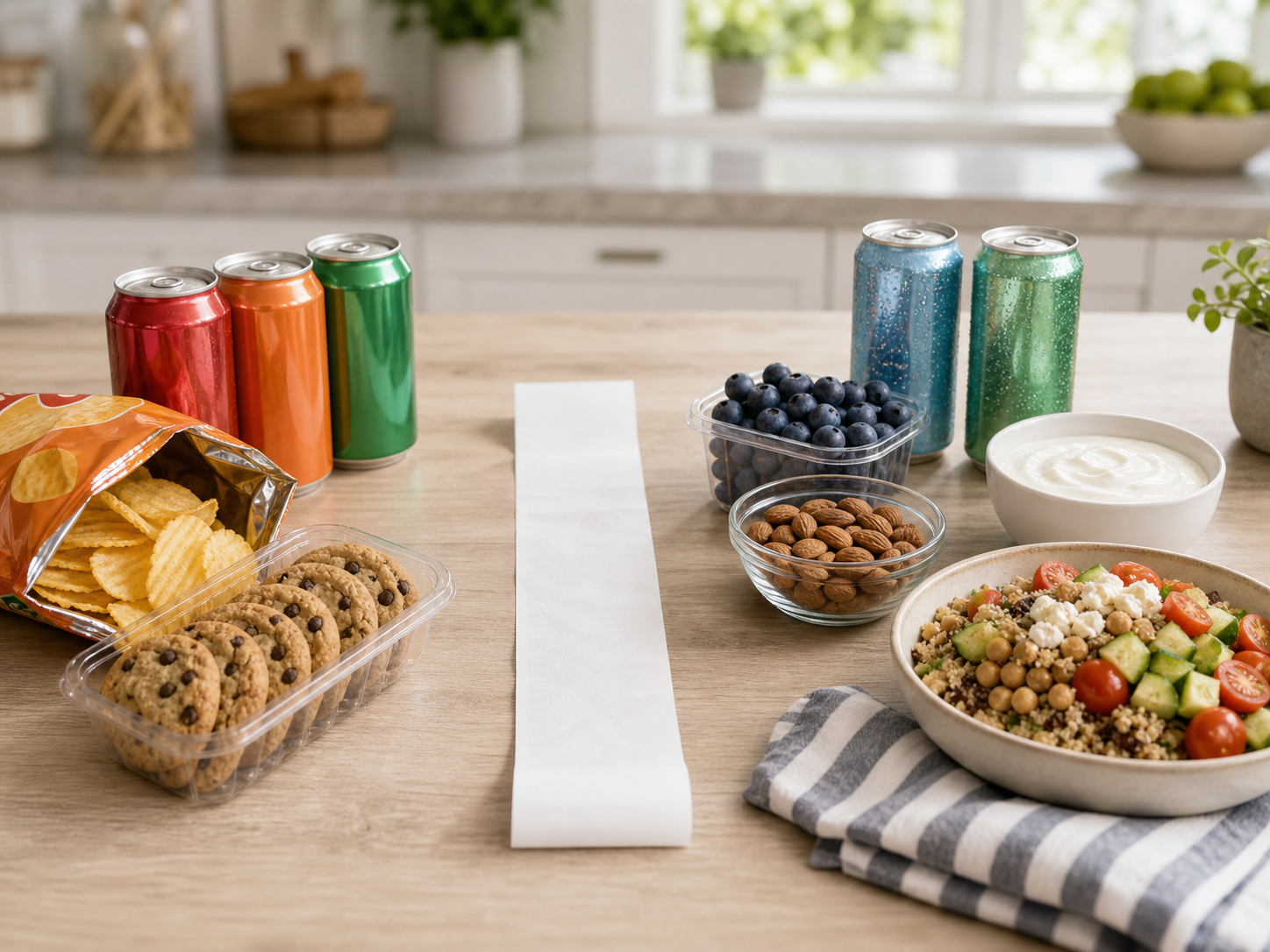
Most people do not accidentally buy one sweet thing. They accidentally buy a tiny sugar committee. Soda, sweet coffee drinks, granola bars, sweet cereal, dessert yogurt, cookies, sauces, and "healthy" snacks with dessert energy can all land in the same cart while each item feels reasonable on its own.
That is why the receipt is useful. It shows the stack. A low sugar grocery list is less about fear and more about pattern recognition. You are not asking, "Did I behave perfectly?" You are asking, "Where did added sugar sneak in more than once, and what can I buy next time that still feels like real life?"
The low sugar cart formula
FDA explains that added sugars are sugars added during processing or packaging. FDA's Daily Value for added sugars is 50 grams per day based on a 2,000 calorie diet, and its Percent Daily Value guide is simple: 5 percent DV or less is low, while 20 percent DV or more is high. You do not need to memorize every number at the store, but you can use the idea to read the cart more clearly.
| Cart job | Buy more often | Watch for |
|---|---|---|
| Unsweetened drinks | Water, sparkling water, unsweetened tea, coffee, flavored seltzer, milk, unsweetened soy milk. | Soda, sweet tea, sports drinks, energy drinks, juice drinks, sweet bottled coffee. |
| Protein anchors | Eggs, Greek yogurt, cottage cheese, tofu, chicken, fish, beans, lentils, tuna, turkey. | Protein bars or shakes that are basically candy with a gym badge. |
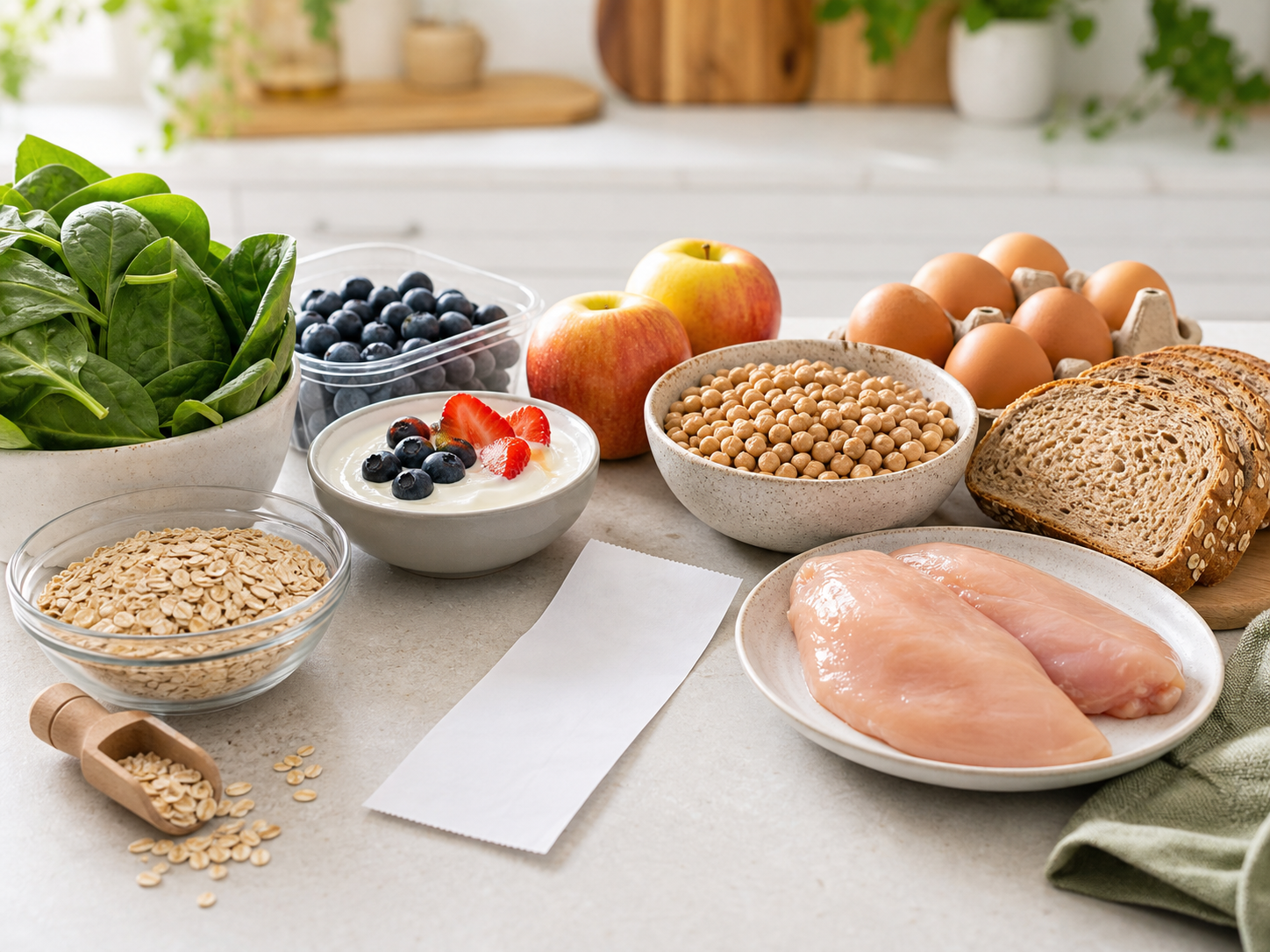
| Fiber foods | Berries, apples, oranges, oats, beans, lentils, carrots, potatoes, frozen vegetables. | Sweetened dried fruit, fruit snacks, syrupy fruit cups, dessert-style granola. |
| Plain bases | Plain yogurt, oats, whole-grain toast, rice, potatoes, tortillas, pasta, unsweetened cereal. | Sweet cereal, dessert yogurt, flavored oatmeal packets, sweet breakfast pastries. |
| Snack defaults | Popcorn, nuts, peanut butter, cheese, hummus, fruit, yogurt, eggs, whole-grain crackers. | Duplicate cookies, candy, snack cakes, sweet bars, and "just in case" desserts. |
Start with drinks because they hide in plain sight
CDC points to sugar-sweetened beverages as a common source of added sugars. That makes drinks the easiest place to start because one beverage habit can quietly shape the whole week. You do not have to become a person who joyfully whispers "plain water" at parties. You just need a default that does not make every snack or meal start with sugar.
Try one practical swap: buy the drink you want to reach for automatically. Sparkling water if bubbles help. Unsweetened tea if you like something cold. Coffee you sweeten yourself if bottled coffee keeps overdoing it. A smaller pack of the sweet drink you truly enjoy if quitting it makes you weirdly dramatic by Wednesday.
Fix breakfast sugar before chasing tiny nutrition details
Breakfast can be a sugar pileup with excellent public relations. Sweet cereal plus flavored yogurt plus sweet coffee can look like breakfast but behave like dessert with a calendar invite. A better grocery list gives you plain bases and lets you add sweetness on purpose.
- Oats + banana + peanut butter + cinnamon.
- Plain Greek yogurt + berries + nuts.
- Eggs + toast + fruit.
- Cottage cheese + berries + whole-grain toast.
- Lower-sugar cereal + milk + fruit.
The trick is not to make breakfast sad. The trick is to stop buying three sweet breakfast foods that all pretend to be the sensible one.
Keep fruit, but choose the form carefully
Whole fruit belongs in most low added sugar carts because it brings fiber, water, texture, and useful nutrients. Berries, apples, oranges, bananas, peaches, melon, and grapes can all help make snacks easier. The receipt issue is usually not whole fruit. It is fruit-flavored products that lost the fiber and kept the marketing confidence.
Watch fruit snacks, sweetened dried fruit, syrupy fruit cups, juice drinks, and smoothies that drink more like dessert than breakfast. If you have diabetes, kidney disease, a prescribed diet, or medication-related nutrition instructions, follow your clinician's guidance. For general grocery pattern improvement, whole fruit is usually a helper, not the villain.
Buy snacks that do not create a dessert backup drawer
Snacks are not the problem. Backup dessert disguised as snacks is the problem. If the cart has cookies, sweet bars, candy, sweet cereal, and dessert yogurt, that is not variety. It is a small sugar archive.
Choose snacks with a job: protein, fiber, crunch, or convenience. Popcorn gives crunch. Nuts and peanut butter bring fat and staying power. Yogurt and cottage cheese bring protein. Fruit brings sweetness plus fiber and water. Hummus and crackers can become a tiny meal. A good snack should help you reach the next meal, not quietly replace it and ask for a sequel.
Check sauces, not just obvious sweets
Added sugar does not only live in cookies. It can show up in barbecue sauce, ketchup, salad dressing, marinades, pasta sauce, granola, flavored oatmeal, bottled smoothies, and coffee drinks. You do not need to read every label like you are defusing a tiny kitchen bomb. Pick the repeat items. Those matter most.
If you buy the same sauce every week, compare two labels once. If the cereal is a daily habit, check that. If flavored yogurt is breakfast, compare it with plain yogurt plus fruit. The repeat item is where a small change actually shows up on future receipts.
The best low sugar grocery move is not the strictest one. It is the one you can repeat without feeling like your cart has become a lecture.
A practical low sugar grocery list
Use this as a normal-person list, not a prescription. Your needs may change if you have diabetes, pregnancy, kidney disease, an eating disorder history, food allergies, a clinician-prescribed diet, or medication questions.
- Drinks: water, sparkling water, unsweetened tea, coffee, milk, unsweetened soy milk.
- Protein: eggs, plain Greek yogurt, cottage cheese, tofu, tuna, chicken, fish, beans, lentils.
- Fiber: berries, apples, oranges, oats, beans, lentils, potatoes, carrots, frozen vegetables.
- Meal connectors: rice, tortillas, whole-grain toast, pasta, potatoes, tomato sauce, salsa.
- Snacks: popcorn, nuts, peanut butter, hummus, fruit, yogurt, cheese, whole-grain crackers.
- Flavor: mustard, hot sauce, vinegar, lemon juice, herbs, spices, lower-sugar sauces.
The 2-minute low sugar receipt method
After checkout, read the receipt for patterns instead of guilt. The goal is to spot repeated sources of added sugar and replace one default at a time.
- Circle sweet drinks: soda, sweet tea, juice drinks, sweet coffee, energy drinks.
- Star dessert snacks: cookies, candy, snack cakes, sweet bars, pastries.
- Underline protein: foods that make snacks and meals more filling.
- Box fiber: fruit, vegetables, oats, beans, lentils, whole grains, potatoes.
- Pick one repeat swap: change the item that appears most often, not the one that annoys you once.
Example: fixing a sugar-heavy receipt
Imagine the receipt says: sweet cereal, flavored yogurt, soda, cookies, chicken, lettuce, and apples. This is not a disaster cart. It has protein, produce, and fruit. The issue is that sugar shows up in three places before lunch even has a plan.
A better next trip might swap sweet cereal for oats or lower-sugar cereal, flavored yogurt for plain yogurt plus berries, and soda for sparkling water or a smaller pack. Then add a meal connector like rice, tortillas, or potatoes so the chicken and lettuce can become actual food. Same person, better receipt.
How GoalCart can help
GoalCart looks at the whole grocery haul instead of asking you to log every bite. Paste a grocery list or scan a receipt, choose a goal like low sugar, high protein, high fiber, GLP-1 friendly, weight loss, or budget healthy, and review the extracted items.
The report can flag sugar risk, protein support, fiber support, processed-food load, and practical next-trip swaps. Over time, saved receipts make the pattern obvious: sweet drinks every week, dessert snacks doubling up, not enough protein snacks, or plenty of healthy items but not enough meal structure.
Bottom line
A low sugar grocery list does not have to be joyless. It should make the default cart calmer: fewer sweet drinks, fewer duplicate dessert snacks, more protein, more fiber, and more foods that turn into meals. Start with the receipt. Find the repeat sugar source. Swap one thing you can live with. Then let the next receipt show you whether it worked.
Frequently asked questions
What should I buy for a low sugar grocery list?
Start with unsweetened drinks, protein anchors, high-fiber fruit and vegetables, plain yogurt or unsweetened dairy alternatives, simple grains, nuts, popcorn, eggs, beans, tofu, chicken, fish, and sauces with less added sugar.
What is the easiest way to reduce added sugar at the grocery store?
Start with drinks. Replacing one sweet drink default with water, sparkling water, unsweetened tea, or another lower-sugar drink often removes more added sugar than changing a single snack.
Is fruit too sugary for a low sugar grocery list?
For most people, whole fruit belongs on a low added sugar grocery list because it brings fiber, water, vitamins, and texture. People with diabetes, kidney disease, or prescribed diets should follow clinician guidance.
Medical note: GoalCart provides general grocery-pattern insights only. If you have diabetes, kidney disease, pregnancy-related nutrition needs, an eating disorder history, food allergies, a prescribed diet, or medication questions, ask a qualified clinician or registered dietitian before changing your diet.
Sources
- FDA: Added Sugars on the Nutrition Facts Label for added sugar definitions and Daily Value guidance.
- FDA: Daily Value on the Nutrition and Supplement Facts Labels for how Percent Daily Value works.
- CDC: Be Sugar Smart for added sugar awareness and common sources.
- CDC: Rethink Your Drink for sugar-sweetened beverage guidance.
- Dietary Guidelines for Americans for general U.S. dietary guidance.