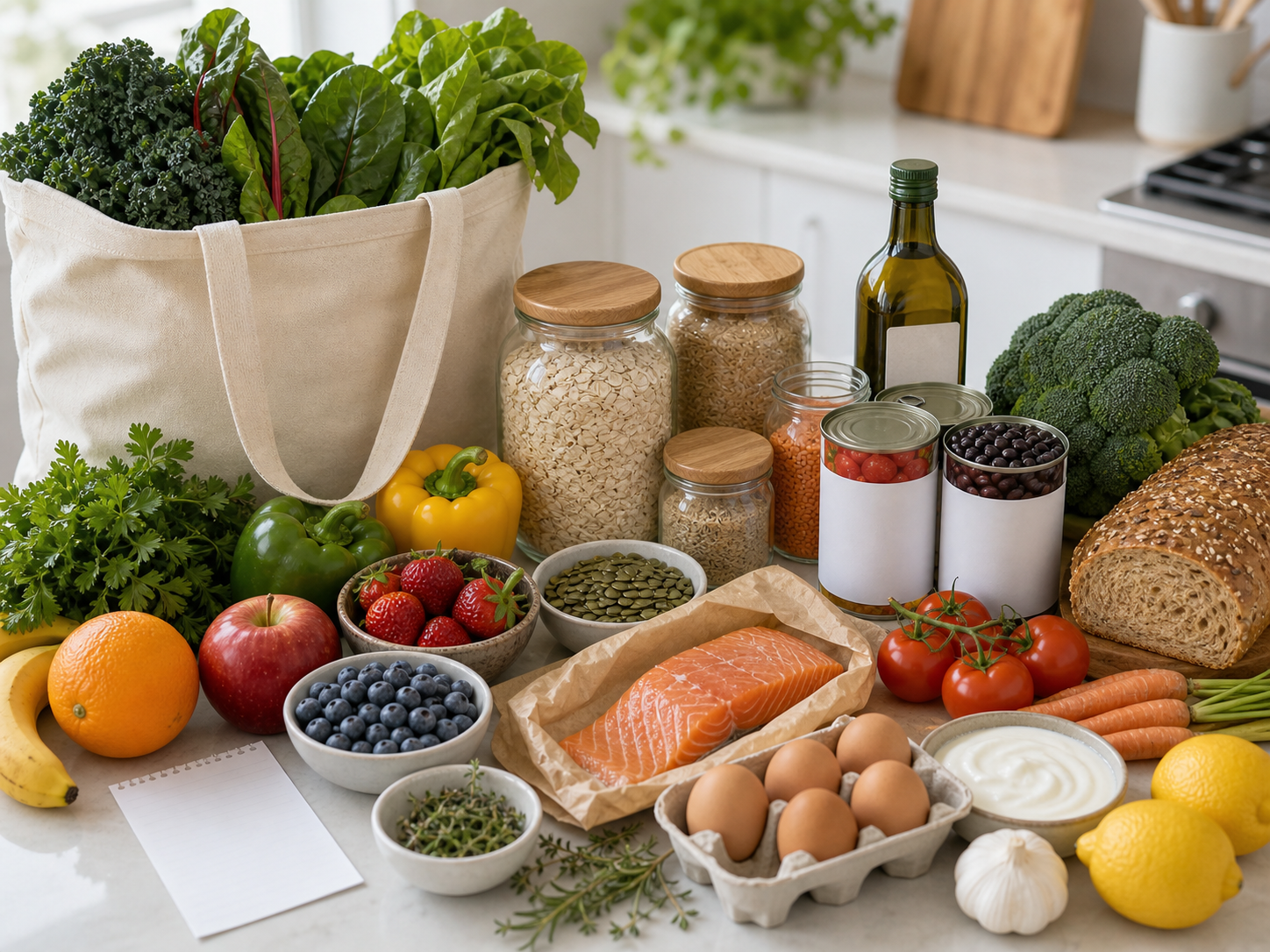
Quick answer: a practical DASH grocery list includes vegetables, fruit, whole grains, beans, lentils, low-fat or fat-free dairy when appropriate, fish, poultry, nuts, seeds, vegetable oils, no-salt-added canned staples, lower-sodium broth, herbs, garlic, citrus, and vinegar. Use the receipt to check whether the cart has meal parts, not just individual "healthy" items.
The NHLBI describes the DASH eating plan around food groups: vegetables, fruits, whole grains, fat-free or low-fat dairy products, fish, poultry, beans, nuts, and vegetable oils, while limiting foods high in saturated fat, sweets, sugary drinks, and sodium. For a grocery receipt, that translates into a simple pattern: more plants and fiber, enough protein anchors, and fewer salty packaged defaults.
The DASH Cart Formula
Build the cart from food groups first. Then use sodium labels to choose better versions of the packaged foods you repeat every week.
| Cart part | Good defaults | Receipt question |
|---|---|---|
| Produce | Leafy greens, broccoli, carrots, peppers, tomatoes, potatoes, apples, berries, bananas, oranges | Do I have enough produce for meals and snacks? |
| Fiber staples | Oats, brown rice, barley, whole-grain bread, whole-grain pasta, beans, lentils, chickpeas | Can vegetables become filling meals? |
| Protein anchors | Fish, poultry, eggs, beans, lentils, tofu, plain yogurt, cottage cheese if sodium fits | Are proteins mostly plain, or mostly processed? |
| Lower-sodium pantry support | No-salt-added tomatoes, beans, corn, lower-sodium broth, frozen vegetables without sauce | Which repeat packaged item needs a label comparison? |
| Flavor and fats | Herbs, garlic, onion, lemon, vinegar, pepper, olive oil, nuts, seeds | Will the lower-sodium version still taste finished? |
Start With Produce That Has a Job
Buy vegetables and fruit for specific uses: berries or bananas for breakfast, apples or oranges for snacks, salad greens for quick lunches, frozen vegetables for bowls, potatoes for dinners, and carrots or peppers for easy sides. DASH-style shopping becomes easier when produce is connected to actual meals.
Use Pantry Staples to Make DASH Affordable
Beans, lentils, oats, brown rice, barley, whole-grain pasta, canned tomatoes, frozen vegetables, and lower-sodium broth are the practical base. They add fiber and meal structure without requiring specialty products.
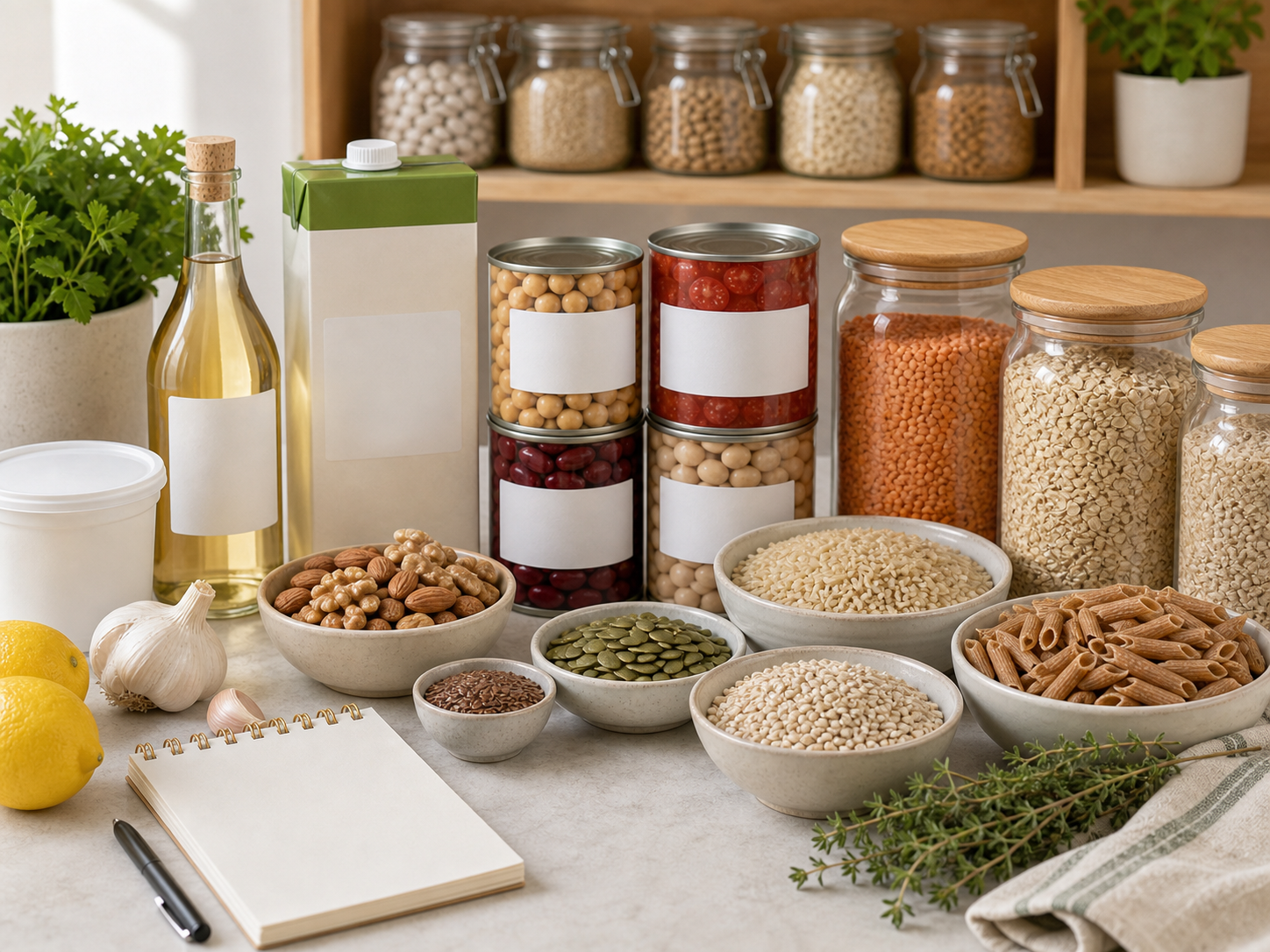
Pantry list
- Oats, brown rice, barley, quinoa, whole-grain pasta, whole-grain bread, whole-grain wraps
- Dry or canned beans, lentils, chickpeas, split peas, no-salt-added canned tomatoes
- Lower-sodium broth, frozen vegetables without sauce, unsalted nuts, seeds, olive oil, vinegar
- Garlic, onions, herbs, lemon, lime, pepper, paprika, cumin, oregano, salt-free seasoning blends
Use Labels on the Repeat Items
The FDA uses 2,300 milligrams as the Daily Value for sodium and explains that 5% Daily Value or less is low while 20% Daily Value or more is high. The highest-value move is not reading every label forever. It is comparing the categories that show up on your receipt again and again: bread, broth, soup, wraps, cheese, deli foods, sauces, frozen meals, snack foods, and canned staples.
DASH Meal Combos From One Cart
A useful grocery list should imply meals before you leave the store. These combinations use normal groceries and keep protein, fiber, and produce in the same frame.
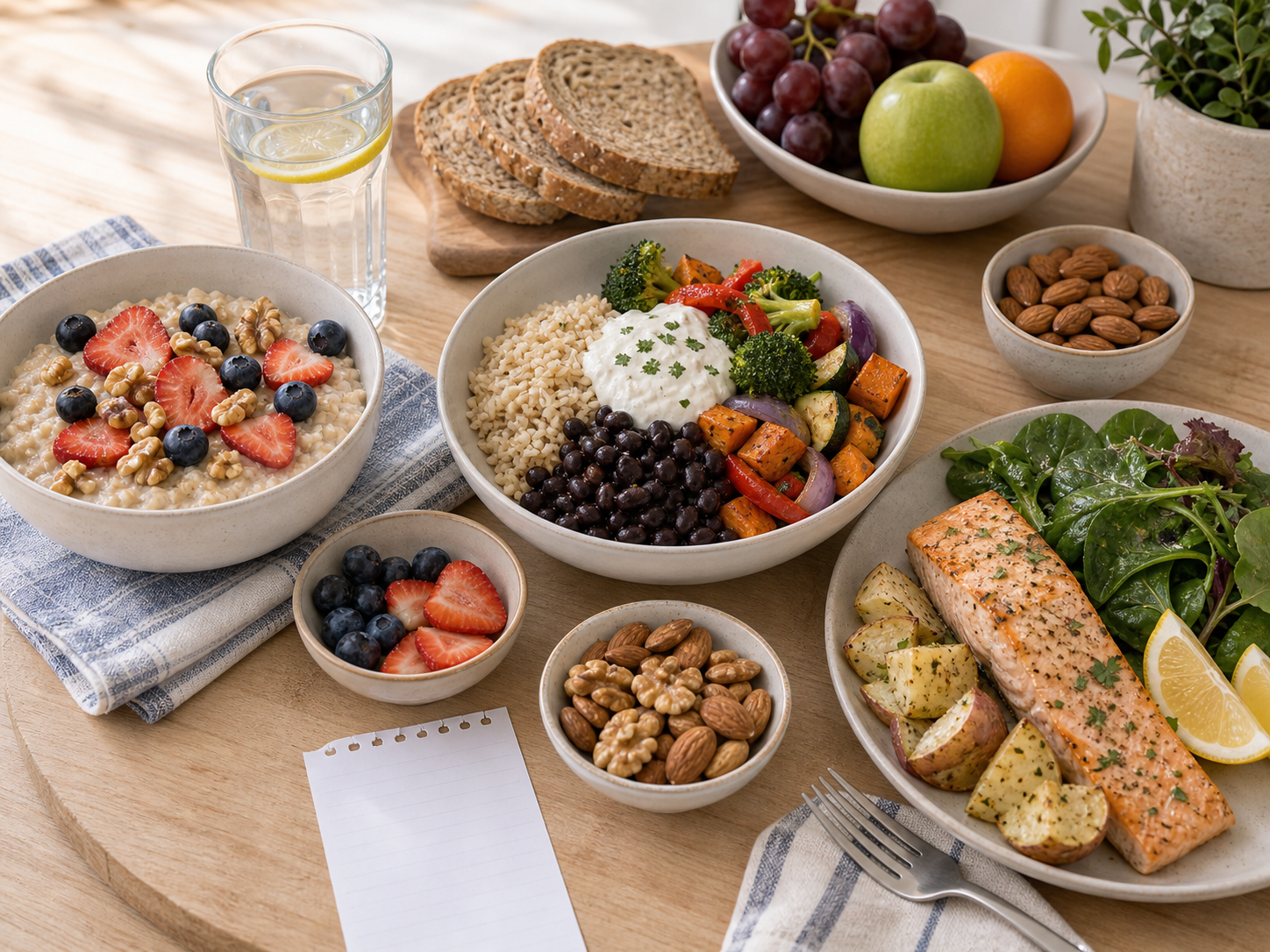
- Breakfast: oats with berries, banana, walnuts, and plain yogurt.
- Lunch: brown rice, black beans, roasted vegetables, greens, and yogurt herb sauce.
- Dinner: salmon or chicken with potatoes, greens, lemon, herbs, and fruit.
- Snack: apple with unsalted nuts, yogurt with berries, or vegetables with hummus.
DASH Grocery List on a Budget
Start with oats, rice, potatoes, dry beans, lentils, frozen vegetables, cabbage, carrots, apples, bananas, eggs, plain yogurt, canned tomatoes, lower-sodium broth, and a few herbs or spices. Add fish, poultry, nuts, or berries when the budget allows. The receipt does not need to look premium to be structurally better.
The Receipt Method
- Count produce roles: breakfast, snack, lunch, dinner, or side.
- Check fiber anchors: oats, beans, lentils, whole grains, potatoes, fruit, vegetables.
- Find protein anchors: fish, poultry, eggs, beans, lentils, yogurt, tofu.
- Flag sodium repeaters: bread, soup, broth, sauces, frozen meals, deli foods, snacks.
- Add flavor builders: herbs, garlic, lemon, vinegar, pepper, spices.
GoalCart tip: scan a receipt or paste a grocery list to check cart-level patterns: protein support, fiber support, sugar risk, processed-food load, and next-trip swaps. For exact sodium numbers, use the Nutrition Facts label.
Sample DASH Grocery List
Produce
- Spinach, kale, romaine, broccoli, carrots, peppers, tomatoes, mushrooms, onions, potatoes
- Apples, bananas, berries, oranges, pears, grapes, melon, frozen fruit without added sugar
Protein, dairy, and alternatives
- Plain yogurt, milk or fortified unsweetened dairy alternatives, eggs, tofu
- Fish, chicken, turkey, beans, lentils, chickpeas, lower-sodium canned fish if it fits your needs
Grains, pantry, and flavor
- Oats, brown rice, barley, quinoa, whole-grain bread, whole-grain pasta
- No-salt-added beans, tomatoes, corn, lower-sodium broth, frozen vegetables
- Unsalted nuts, seeds, olive oil, vinegar, garlic, onions, herbs, citrus, salt-free spices
Bottom Line
A DASH grocery list works when it changes the receipt pattern: more produce, more fiber staples, enough simple protein, better packaged-food comparisons, and flavor that does not depend on salt. Keep it practical and repeatable.
DASH Grocery List FAQ
What foods are core DASH groceries?
Vegetables, fruit, whole grains, beans, lentils, fish, poultry, low-fat or fat-free dairy when appropriate, nuts, seeds, and vegetable oils are common DASH-style grocery anchors.
Can I do DASH-style shopping without expensive foods?
Yes. Oats, rice, potatoes, dry beans, lentils, frozen vegetables, cabbage, carrots, apples, bananas, eggs, yogurt, and canned tomatoes can form a budget-friendly base.
Should I follow this if I have a prescribed diet?
Use this article only as general grocery organization. Follow clinician or registered dietitian guidance for medical conditions, kidney disease, prescribed sodium or potassium targets, pregnancy, or medication concerns.