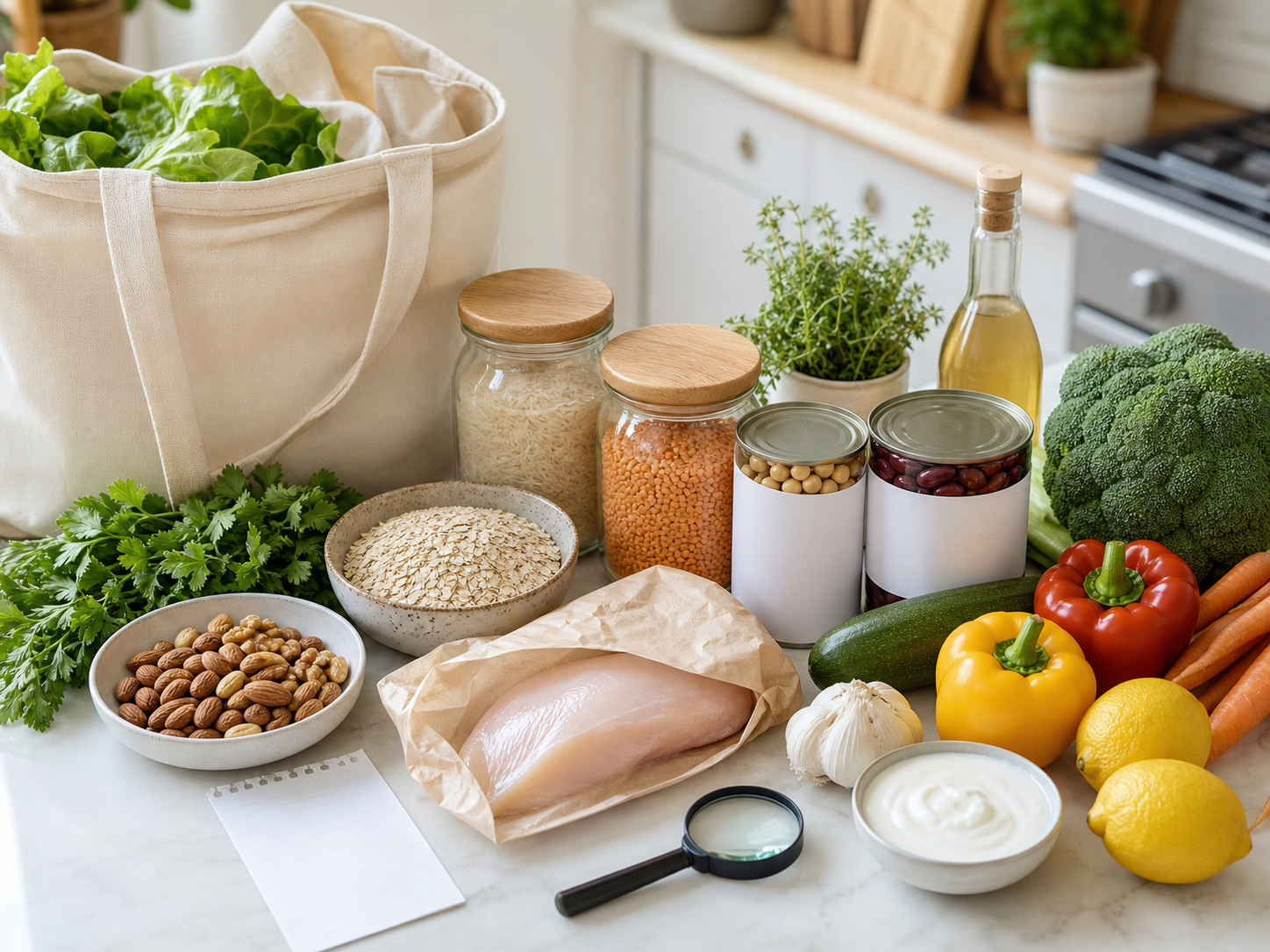
Quick answer: a low sodium grocery list starts with naturally lower-sodium foods like vegetables, fruit, dry beans, lentils, plain oats, rice, potatoes, eggs, tofu, plain yogurt, fresh fish, fresh chicken, unsalted nuts, herbs, citrus, vinegar, and no-salt-added canned staples. Then use the Nutrition Facts label to compare packaged foods before they become repeat buys.
Sodium is sneaky because it usually does not show up as one obvious purchase. It shows up as bread plus deli meat plus soup plus sauce plus frozen meal plus salty snack. Any one item might look normal. The receipt is where the pattern gets loud.
The FDA uses 2,300 milligrams as the Daily Value for sodium, and its label guidance says 5% Daily Value or less is low while 20% Daily Value or more is high. That makes your best shopping move simple: compare similar products, especially the ones you buy every week.
The Low Sodium Cart Formula
Do not build the cart around what you have to avoid. Build it around meals that already work with less salt. A practical low sodium cart has five parts.
| Cart part | Good defaults | Receipt question |
|---|---|---|
| Fresh or plain base foods | Vegetables, fruit, rice, oats, potatoes, dry beans, lentils, plain pasta, tortillas with lower sodium | Do I have enough plain foods to make real meals? |
| Protein anchors | Eggs, tofu, plain yogurt, fresh chicken, fish, beans, lentils, unsalted nuts, lower-sodium canned fish | Are most proteins fresh/plain, or mostly deli and packaged? |
| No-salt-added pantry help | No-salt-added tomatoes, beans, corn, broth, tomato paste, unsalted nut butter, frozen vegetables | Can pantry foods help dinner without bringing a salt pile? |
| Flavor builders | Garlic, onion, ginger, herbs, citrus, vinegar, pepper, salt-free spice blends, olive oil | Did I buy flavor, or only remove salt? |
| Convenience with guardrails | Lower-sodium soups, sauces, frozen meals, breads, wraps, and snacks chosen by label comparison | Which packaged item is doing the most sodium damage? |
Start With Naturally Lower-Sodium Foods
The easiest low sodium grocery list is not a cart full of specialty products. It is a cart with more foods that are low in sodium before anyone touches a label: vegetables, fruit, oats, rice, potatoes, dry beans, lentils, eggs, plain yogurt, fresh fish, fresh chicken, tofu, and unsalted nuts or seeds.
That does two things at once. First, it lowers the average sodium level of the cart. Second, it makes packaged convenience foods easier to use in smaller roles. A higher-sodium sauce is less of a problem when it is stretched over rice, vegetables, beans, and fresh protein instead of being the whole meal.
Use the Label on Packaged Foods
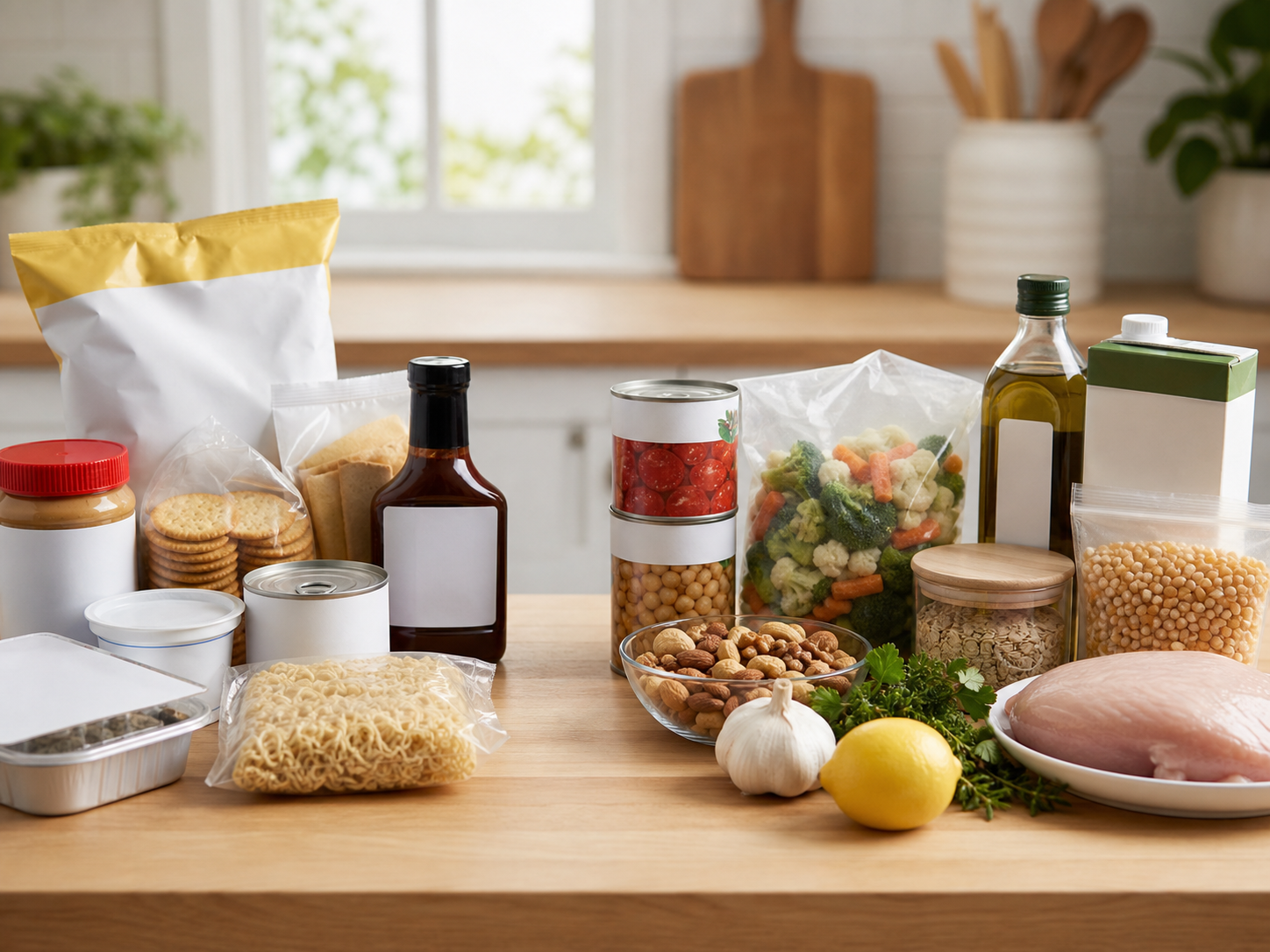
Front labels can help, but the Nutrition Facts panel is the steadier tool. Look at sodium per serving, then look at how many servings you actually eat. The label move that pays off fastest is comparing two versions of the same food: broth, canned tomatoes, beans, bread, wraps, soup, sauce, frozen meals, crackers, cottage cheese, or deli-style proteins.
Label shortcuts that work in the aisle
- 5% DV or less: a lower-sodium choice by the FDA's Daily Value rule of thumb.
- 20% DV or more: a high-sodium item worth comparing or using less often.
- No salt added: useful for canned beans, tomatoes, corn, broth, and vegetables, but still check the label.
- Reduced sodium: can still be high. Compare the actual sodium number, not just the claim.
- Serving size: if you eat two servings, the sodium doubles. Small print has a talent for mischief.
Watch the Foods That Do Not Taste Salty Enough to Warn You
Many high-sodium receipts are not built from chips alone. Sodium often hides in everyday convenience foods: bread and rolls, deli meat, cheese, canned soup, frozen entrees, pizza, sauces, salad dressings, tortillas, seasoning packets, instant noodles, pickles, olives, and restaurant-style ready meals.
You do not have to delete all of them. Pick the ones that show up every week and find the lower-sodium version first. A once-in-a-while salty food is not the same as a default that quietly appears on every receipt.
Buy Flavor Builders Before You Miss the Salt
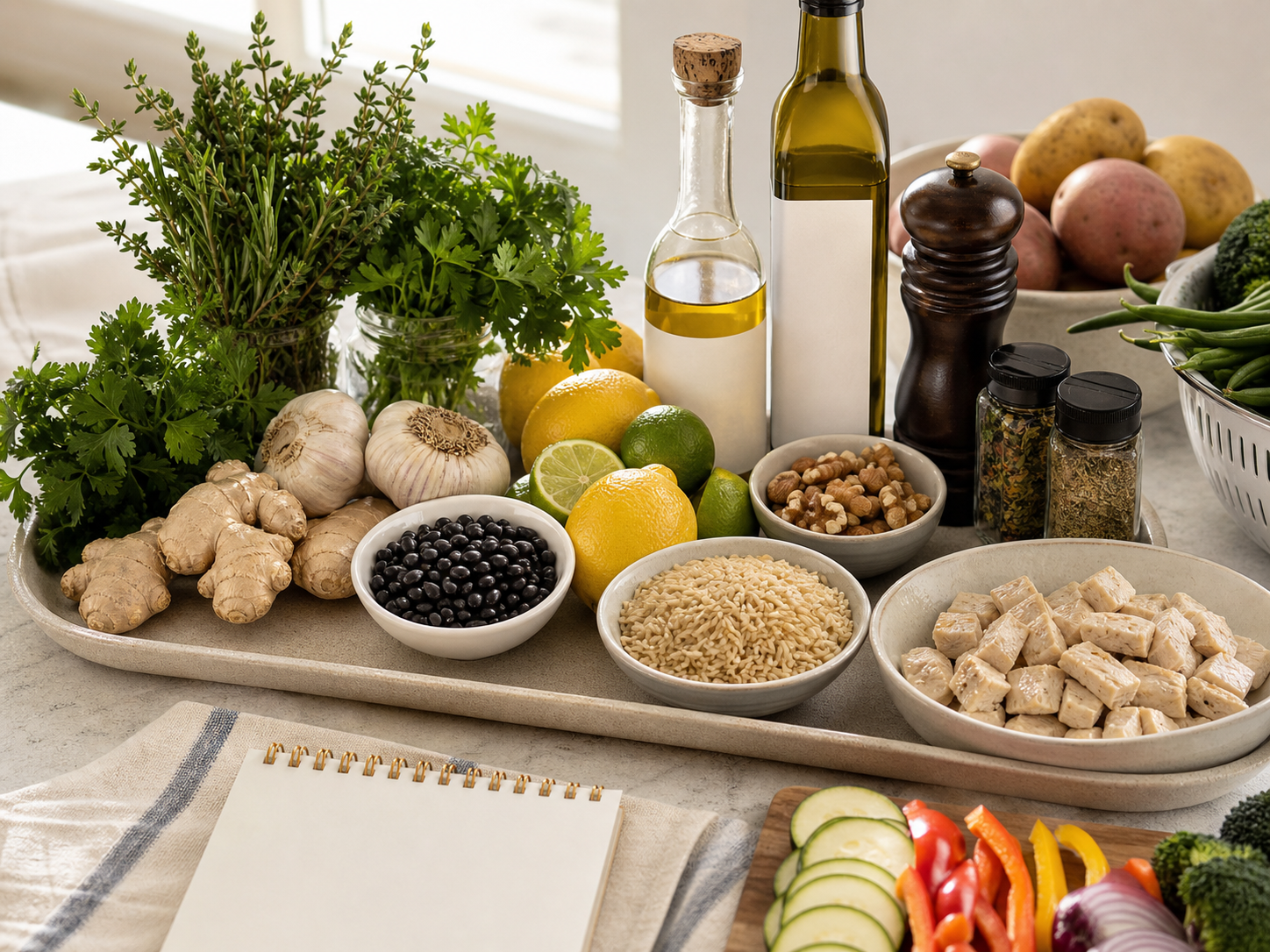
Low sodium shopping fails when the cart removes salt but forgets flavor. Put flavor builders on the list on purpose: lemons, limes, vinegar, garlic, onions, ginger, herbs, pepper, chili flakes, paprika, cumin, oregano, basil, cilantro, parsley, mustard powder, and salt-free seasoning blends.
A Practical Low Sodium Grocery List
Use this as a starting list, then adapt it to your budget, culture, cooking time, and medical needs.
Produce
- Leafy greens, broccoli, carrots, cabbage, cucumbers, peppers, zucchini, onions, mushrooms
- Potatoes, sweet potatoes, squash, tomatoes, avocado
- Apples, berries, oranges, bananas, grapes, melon, pears
- Frozen vegetables without sauce packets
Pantry staples
- Plain oats, brown rice, white rice, barley, quinoa, plain pasta, corn tortillas or lower-sodium wraps
- Dry beans, lentils, chickpeas, split peas
- No-salt-added canned beans, tomatoes, corn, vegetables, broth, and tomato paste
- Unsalted nuts, unsalted peanut butter, chia seeds, ground flax, popcorn kernels
Protein and dairy
- Eggs, tofu, tempeh, plain yogurt, milk, kefir
- Fresh chicken, turkey, fish, lean meat, or plant-based proteins with lower sodium on the label
- Lower-sodium canned tuna or salmon when it fits your budget and taste
- Cottage cheese or cheese only after comparing labels, because sodium varies a lot by product
Flavor
- Lemons, limes, vinegar, garlic, onion, ginger, pepper, chili flakes, herbs, salt-free spice blends
- Olive oil, avocado oil, sesame oil, mustard powder, nutritional yeast if you like it
- Lower-sodium soy sauce, broth, salsa, hot sauce, or dressing when the label is genuinely better
Low Sodium on a Budget
The budget version is not fancy. Buy dry beans or lentils, plain rice, oats, potatoes, frozen vegetables, cabbage, carrots, bananas, apples, eggs, tofu, canned tomatoes with no salt added, and a few strong flavor builders. That gives you bowls, soups, breakfast, snacks, and sides without depending on pricey specialty products.
If you can only change three repeat items this week, start with broth, canned beans, and the salty snack or frozen meal that appears most often. Those swaps are easy to repeat, and repeated swaps matter more than one heroic perfect trip.
The Receipt Method
After shopping, scan the receipt with your eyes before you judge the whole week. Circle the items that are likely sodium drivers: soups, sauces, deli foods, frozen meals, snack foods, seasoning packets, breads, cheeses, and restaurant-style prepared foods.
- Find the repeaters. Which salty convenience foods show up every trip?
- Pick one comparison category. Compare only broth this week, then bread or soup next week.
- Add one flavor builder. Lemon, vinegar, herbs, or garlic makes the lower-sodium version easier to keep buying.
- Protect protein and fiber. Do not lower sodium by removing real meal anchors. Swap toward plain versions instead.
GoalCart tip: paste a grocery list or scan a receipt to look for cart-level patterns: protein anchors, fiber support, added-sugar risk, processed-food load, and next-trip swaps. For sodium, use GoalCart as a pattern check, then use Nutrition Facts labels for exact sodium numbers.
A Before-and-After Cart Fix
Suppose the receipt has instant noodles, deli turkey, canned soup, regular broth, chips, frozen pizza, and sweet drinks. Do not try to become a different person by Thursday. Try this:
- Swap regular broth for no-salt-added or lower-sodium broth.
- Swap canned soup for low-sodium soup, or stretch it with frozen vegetables and beans.
- Keep one convenience dinner, but add a plain base: rice, potatoes, salad greens, or frozen vegetables.
- Replace one salty snack slot with unsalted nuts, fruit with yogurt, popcorn kernels, or hummus with vegetables if the label works.
- Buy lemon, garlic, herbs, and vinegar so lower-sodium meals still taste finished.
That is a better receipt, not a perfect one. Perfect receipts are fragile. Repeatable receipts are useful.
Bottom Line
A low sodium grocery list works best when it is not just a restriction list. Start with plain foods, choose no-salt-added pantry staples, compare sodium on packaged repeats, and buy flavor builders before you miss the salt. If you have a medical condition or a prescribed sodium target, use this as grocery organization only and follow your clinician's guidance.
Low Sodium Grocery List FAQ
What foods are naturally low in sodium?
Fresh vegetables, fruit, plain oats, rice, potatoes, dry beans, lentils, eggs, tofu, plain yogurt, fresh fish, fresh poultry, and unsalted nuts or seeds are common lower-sodium defaults.
Are canned foods bad for a low sodium grocery list?
Not automatically. No-salt-added canned beans, tomatoes, corn, and vegetables can be practical. Regular canned foods vary, so compare labels and rinse canned beans or vegetables when it makes sense.
Can low sodium food still taste good?
Yes. Buy flavor builders on purpose: citrus, vinegar, garlic, onions, herbs, pepper, spices, ginger, and salt-free seasoning blends. Lower sodium gets easier when meals still have brightness, aroma, and texture.