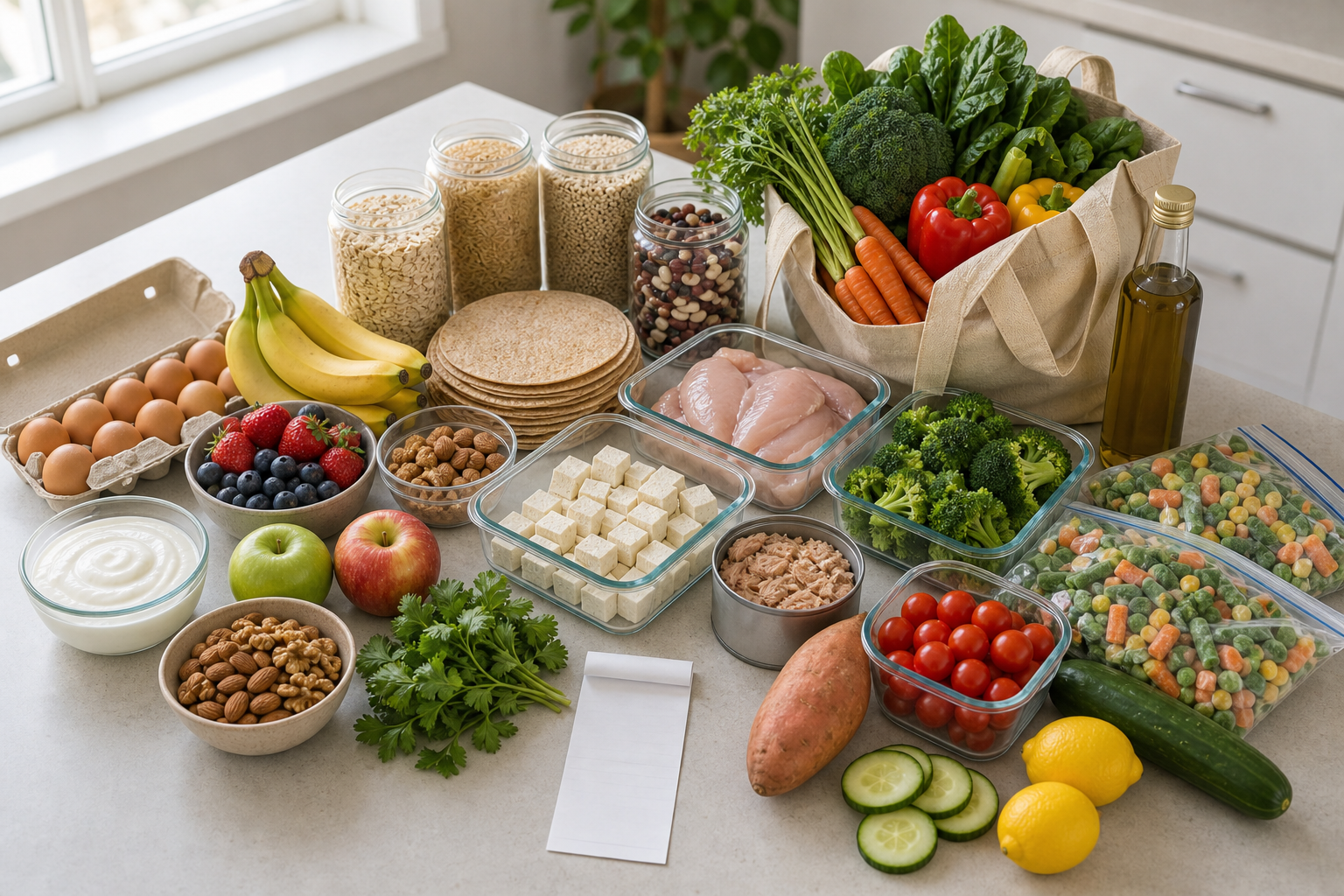
Quick answer: a healthy meal prep grocery list needs protein anchors, fiber-rich bases, vegetables, fruit, flavor builders, snacks, and backup meals. Good defaults include oats, brown rice, quinoa, potatoes, beans, lentils, eggs, plain yogurt, tofu, chicken, tuna, greens, broccoli, peppers, carrots, cucumbers, berries, apples, nuts, hummus, herbs, citrus, and frozen vegetables.
Nutrition.gov groups meal planning and food shopping together for a reason: the shopping trip determines what kind of week is realistic. MyPlate also keeps meals grounded in simple food groups. For a receipt, that means checking whether you bought enough meal parts, not just a collection of good intentions.
The Meal Prep Cart Formula
Build the cart around reusable parts. Each item should help with breakfast, lunch, dinner, snack, or backup meals.
| Cart part | Good defaults | Receipt question |
|---|---|---|
| Protein anchors | Eggs, yogurt, tofu, chicken, tuna, beans, lentils, cottage cheese, edamame | Can each lunch or dinner get a protein source without extra cooking? |
| Fiber-rich bases | Oats, brown rice, quinoa, potatoes, whole-grain wraps, beans, lentils | Do the meals have enough structure to be filling? |
| Produce | Greens, broccoli, peppers, carrots, cucumbers, tomatoes, berries, apples, bananas | Do I have vegetables and fruit for more than one meal? |
| Flavor builders | Hummus, yogurt sauce, salsa, herbs, garlic, citrus, olive oil, vinegar, spices | Will the prepared food still taste good on day two? |
| Backups | Frozen vegetables, canned beans, soup, tuna, rice pouches, tortillas, eggs | What saves dinner when prep runs out? |
Start With Protein Anchors
Protein anchors are the items that keep meal prep from becoming containers of plain rice and vegetables. Pick two or three each week. Mix faster options with cook-once options so the plan does not depend on one big cooking session.
Useful protein buys
- Eggs, plain Greek yogurt, cottage cheese, tofu, tempeh, edamame
- Chicken, turkey, tuna, salmon, beans, lentils, chickpeas
- Hummus, peanut butter, nuts, seeds, and yogurt-based sauces for snacks and quick meals
Prep Staples That Can Move Around
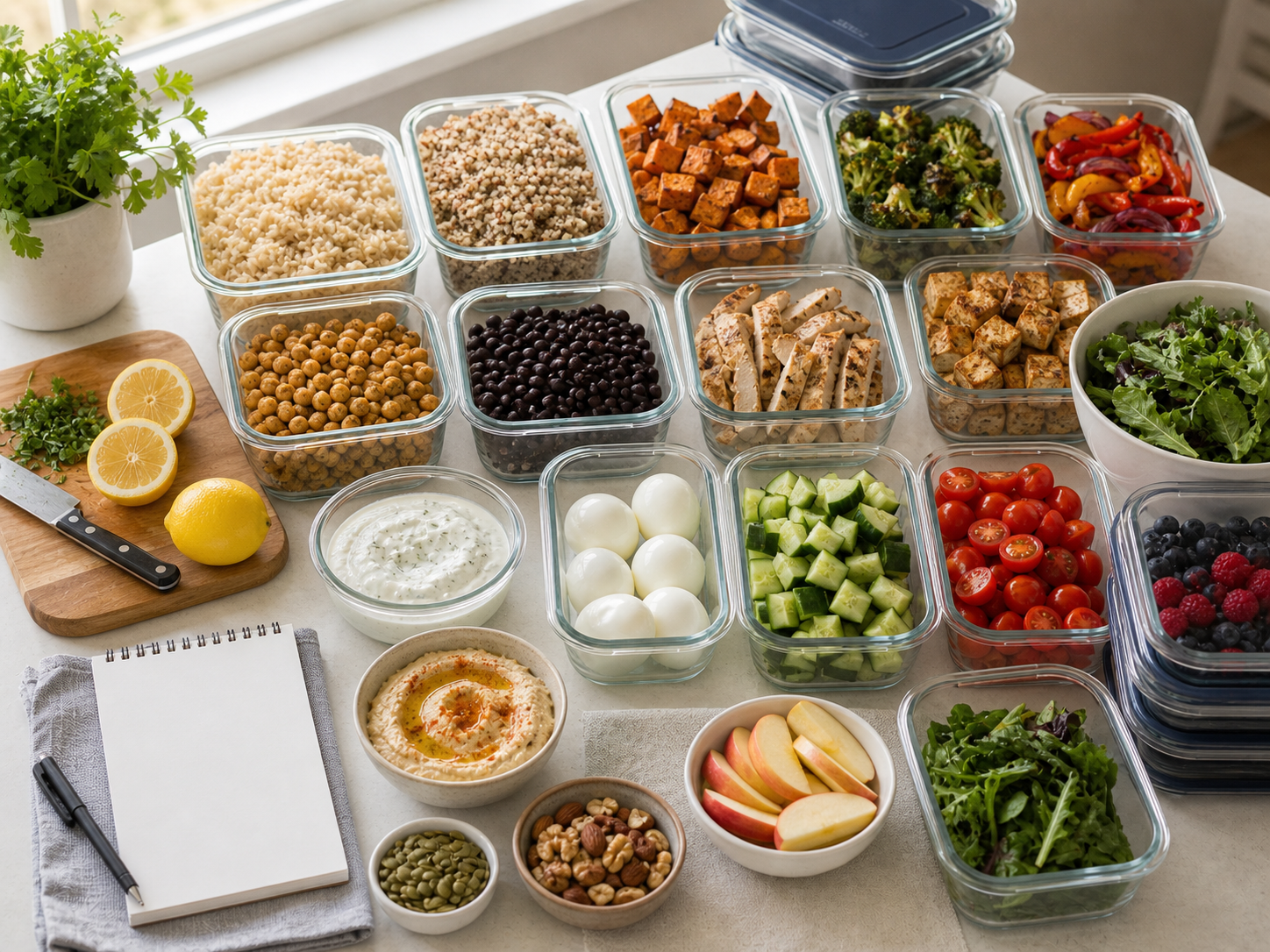
The best meal prep ingredients are flexible. Roasted vegetables can go into bowls, wraps, eggs, or sides. Beans can become soup, salad, tacos, or rice bowls. Yogurt can be breakfast or sauce. That flexibility keeps the cart useful even when the week changes.
Flexible staples
- Cook once: brown rice, quinoa, potatoes, roasted broccoli, peppers, carrots, chicken, tofu
- Open and use: canned beans, tuna, hummus, yogurt, salsa, frozen vegetables, bagged greens
- Snack support: apples, berries, nuts, boiled eggs, carrots, cucumbers, whole-grain crackers
Use Labels on Repeat Packaged Foods
The FDA Nutrition Facts label is most useful on items that repeat every week: wraps, breads, sauces, frozen meals, soups, yogurts, snack bars, and prepared proteins. Compare protein, fiber, sodium, saturated fat, and added sugars instead of treating every front label as a promise.
Do Not Ignore Food Safety
Meal prep is only useful if the food is handled safely. FoodSafety.gov summarizes the basic steps as clean, separate, cook, and chill. This article is not a storage-time chart, so use official food safety guidance for cooling, refrigeration, reheating, and leftovers.
Meal Prep Combos From One Cart
A good grocery list should make meals obvious before you leave the store. These combinations use the same ingredients in multiple ways.
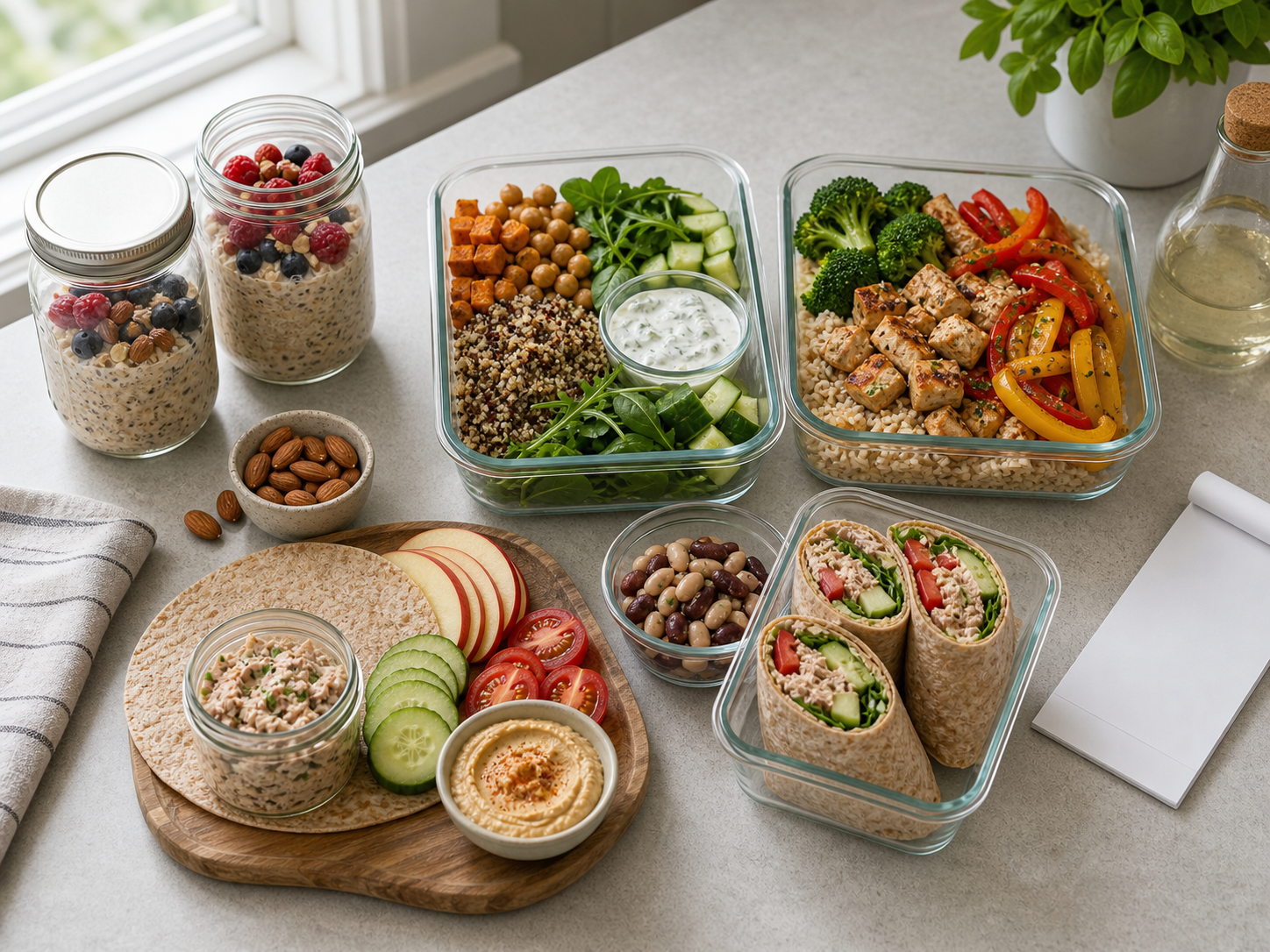
- Breakfast: oats, yogurt or fortified milk, berries, banana, nuts, and chia.
- Bowl: quinoa, chickpeas, greens, cucumbers, tomatoes, roasted vegetables, and yogurt herb sauce.
- Dinner: chicken or tofu, brown rice, broccoli, peppers, lemon, herbs, and olive oil.
- Wrap: tuna or beans, whole-grain wrap, hummus, cucumbers, tomatoes, greens, and fruit.
- Backup: eggs, frozen vegetables, beans, potatoes, salsa, and tortillas.
Budget Meal Prep Grocery List
Start with oats, rice, potatoes, dry beans, lentils, eggs, tofu, canned tuna, frozen vegetables, cabbage, carrots, bananas, apples, plain yogurt, peanut butter, and a few sauces or spices. Add salmon, berries, specialty grains, or pre-cut produce when the budget allows.
The Receipt Method
- Circle protein anchors: eggs, yogurt, tofu, chicken, tuna, beans, lentils.
- Find bases: oats, rice, quinoa, potatoes, wraps, whole grains.
- Count produce roles: breakfast fruit, snack produce, lunch vegetables, dinner vegetables.
- Check flavor builders: sauces, herbs, citrus, garlic, spices, hummus, vinegar.
- Add backups: frozen vegetables, canned beans, soup, eggs, tuna, tortillas.
GoalCart tip: scan a receipt or paste a grocery list to see whether the cart supports protein, fiber, lower sugar patterns, fewer highly processed defaults, and realistic next-trip swaps.
Sample Healthy Meal Prep Grocery List
Proteins
- Eggs, plain yogurt, tofu, chicken, tuna, beans, lentils, chickpeas, edamame
Bases and produce
- Oats, brown rice, quinoa, potatoes, whole-grain wraps, whole-grain bread
- Greens, broccoli, carrots, peppers, cucumbers, tomatoes, onions, frozen vegetables
- Berries, bananas, apples, oranges, frozen fruit without added sugar
Flavor, snacks, and backups
- Hummus, salsa, plain yogurt sauce, olive oil, vinegar, herbs, garlic, lemon, spices
- Nuts, seeds, peanut butter, whole-grain crackers, canned beans, soup, freezer vegetables
Bottom Line
Healthy meal prep starts at the receipt. Buy meal parts that can move between breakfasts, bowls, wraps, snacks, and backup dinners. The cart does not need to be perfect; it needs enough structure to make the next few meals easier.
Healthy Meal Prep Grocery List FAQ
What are the most useful meal prep groceries?
Oats, rice, potatoes, beans, lentils, eggs, yogurt, tofu, chicken, tuna, greens, frozen vegetables, fruit, hummus, herbs, citrus, nuts, and seeds are useful because they can become several meals.
How many proteins should I buy for meal prep?
For most general shopping trips, two or three protein anchors are more useful than one large batch of a single food. This gives you more flexibility across bowls, wraps, snacks, and backup dinners.
Do I need containers to meal prep?
Containers help, but the bigger issue is buying flexible ingredients. You can prep components, not full finished meals, and still make the week easier.