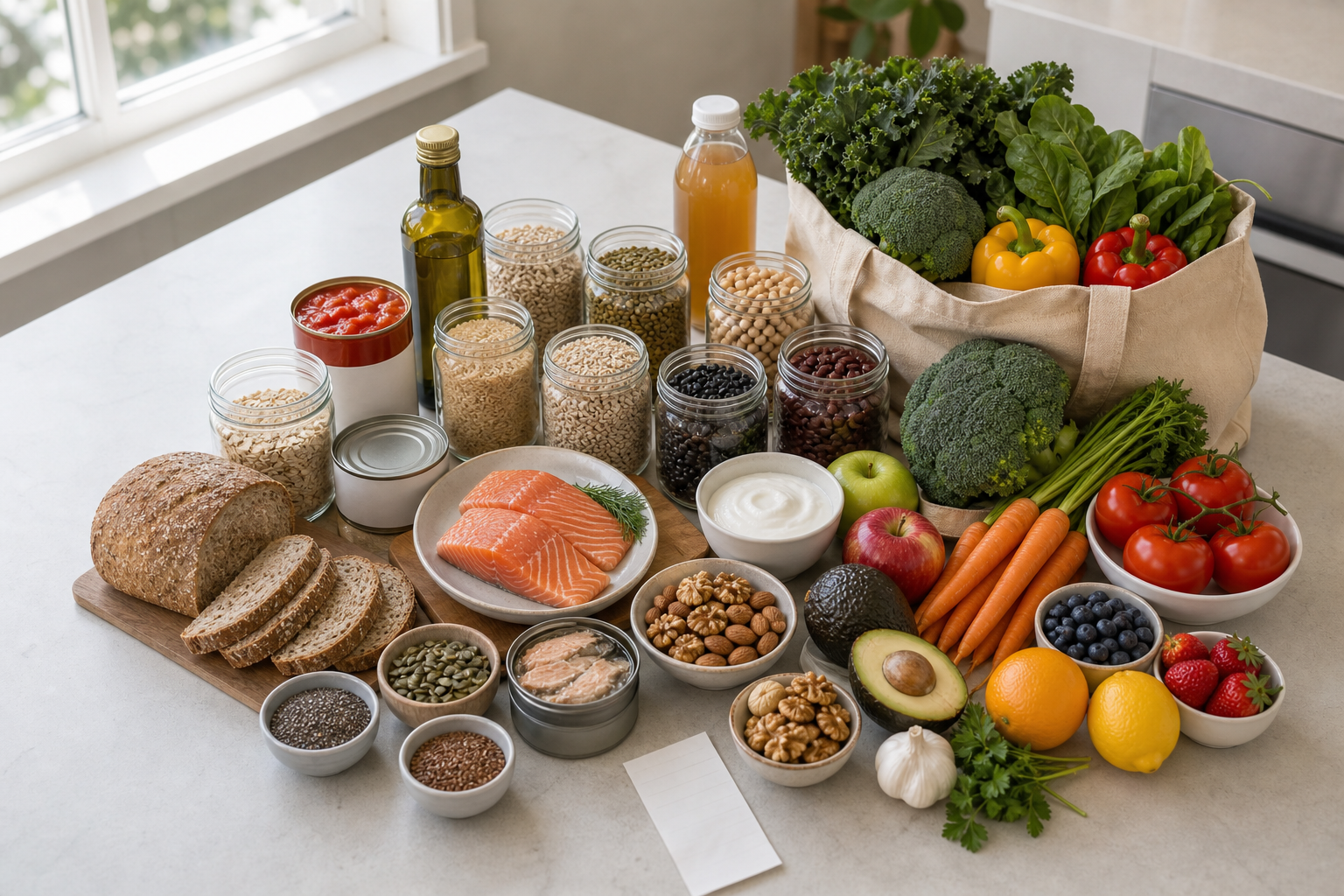
Quick answer: a practical heart-healthy grocery list includes vegetables, fruit, whole grains, beans, lentils, fish, plain yogurt or appropriate alternatives, nuts, seeds, olive oil, avocado, no-salt-added canned staples, lower-sodium broth, herbs, garlic, citrus, vinegar, and simple proteins. Use the receipt to check the pattern: fiber, produce, protein, fats, sodium, added sugars, and repeat packaged foods.
NHLBI heart-healthy eating guidance emphasizes a pattern with vegetables, fruits, whole grains, low-fat dairy when appropriate, fish, poultry, beans, nuts, and vegetable oils, while limiting foods high in saturated fat, sodium, and added sugars. For a grocery receipt, that becomes a practical checklist: add fiber, choose better fats, compare sodium, and make simple meals easier.
The Heart-Healthy Cart Formula
Build the cart from food groups first. Then use labels on the packaged foods that show up every week.
| Cart part | Good defaults | Receipt question |
|---|---|---|
| Produce | Leafy greens, broccoli, peppers, tomatoes, carrots, berries, apples, oranges | Does the cart support meals and snacks with actual produce? |
| Fiber staples | Oats, barley, brown rice, quinoa, whole-grain bread, beans, lentils, chickpeas | Can meals become filling without relying on snack foods? |
| Protein anchors | Fish, beans, lentils, tofu, poultry, eggs, plain yogurt, lower-sodium canned fish | Are proteins mostly simple, or mostly processed? |
| Fats and flavor | Olive oil, avocado, nuts, seeds, herbs, garlic, onions, lemon, vinegar, spices | Can lower-sodium food still taste finished? |
| Label checks | Sodium, saturated fat, added sugars, fiber, serving size | Which repeat packaged item needs a comparison? |
Start With Produce and Fiber
The most reliable upgrade is not a specialty product. It is more produce and more fiber-rich staples that can become meals: oats for breakfast, beans for bowls, lentils for soup, barley or brown rice for sides, berries and apples for snacks, and vegetables that can be roasted, sauteed, or added to soup.
Choose Protein and Fats That Fit the Pattern
Heart-healthy shopping usually works better when the cart has simple protein anchors and unsaturated fat sources. That can mean fish, beans, lentils, tofu, poultry, yogurt, nuts, seeds, avocado, and olive oil. It does not mean every packaged food with a heart-friendly front label is automatically a good fit.
Build a Pantry That Makes Lower-Sodium Meals Easier
Lower-sodium shopping is harder when all flavor comes from salty packaged sauces. Keep herbs, garlic, onions, citrus, vinegar, spices, olive oil, beans, grains, canned tomatoes, and broth options that fit your label goals.
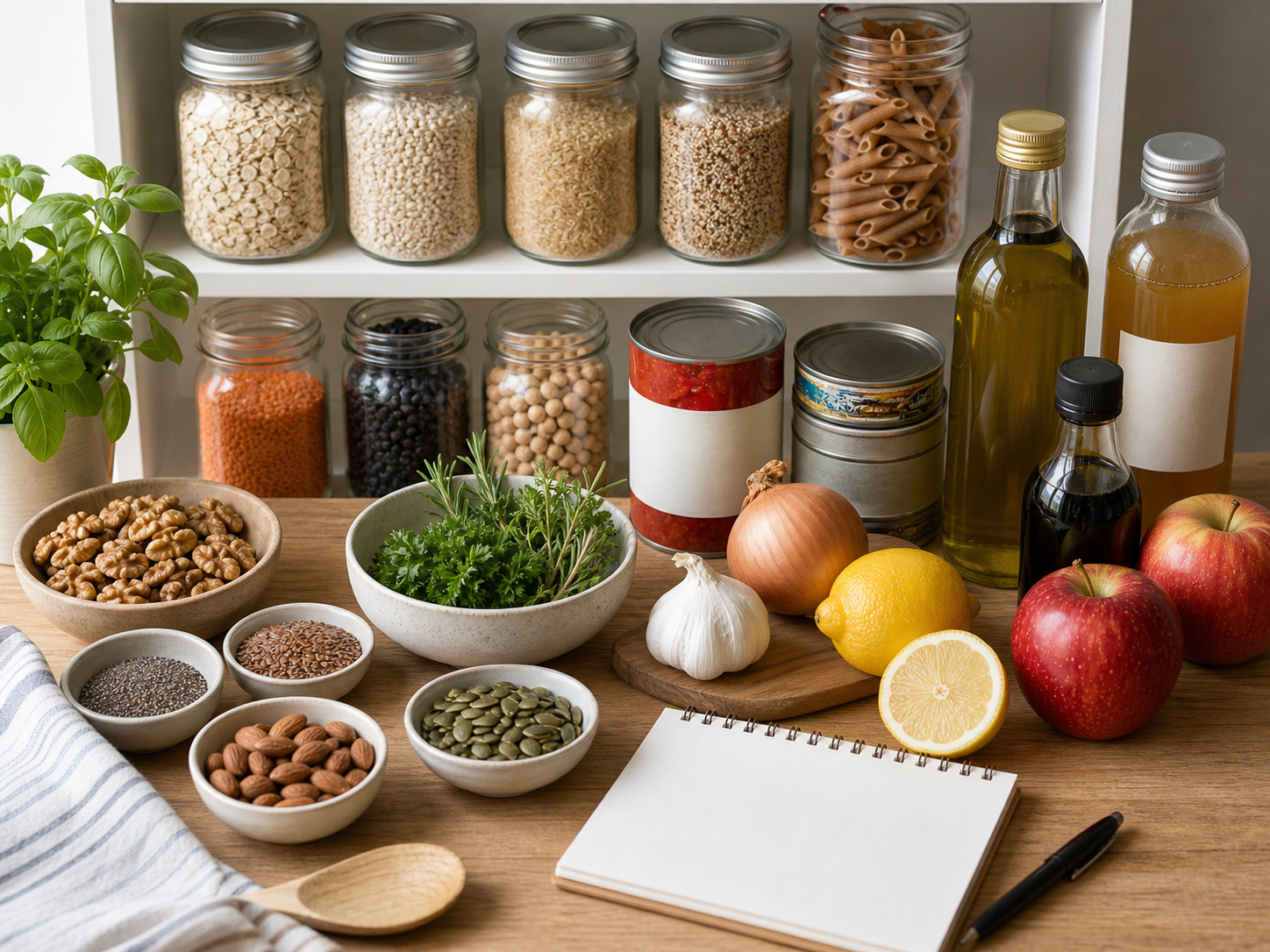
Pantry list
- Oats, barley, brown rice, quinoa, whole-grain pasta, whole-grain bread, potatoes
- Dry or canned beans, lentils, chickpeas, no-salt-added tomatoes, lower-sodium broth
- Canned salmon, sardines, or tuna with label checks that fit your needs
- Olive oil, vinegar, garlic, onions, herbs, lemon, lime, spices, unsalted nuts, seeds
Use Labels on Sodium, Saturated Fat, and Added Sugars
The FDA Nutrition Facts label is useful because the risky repeat items are often packaged: bread, soup, broth, sauces, frozen meals, snack foods, processed meats, flavored yogurts, sweet drinks, and desserts. Compare sodium, saturated fat, added sugars, fiber, and serving size on the foods you buy repeatedly.
Heart-Healthy Meal Combos From One Cart
A good grocery list should make meals obvious. These combinations keep produce, fiber, protein, and flavor in the same frame.
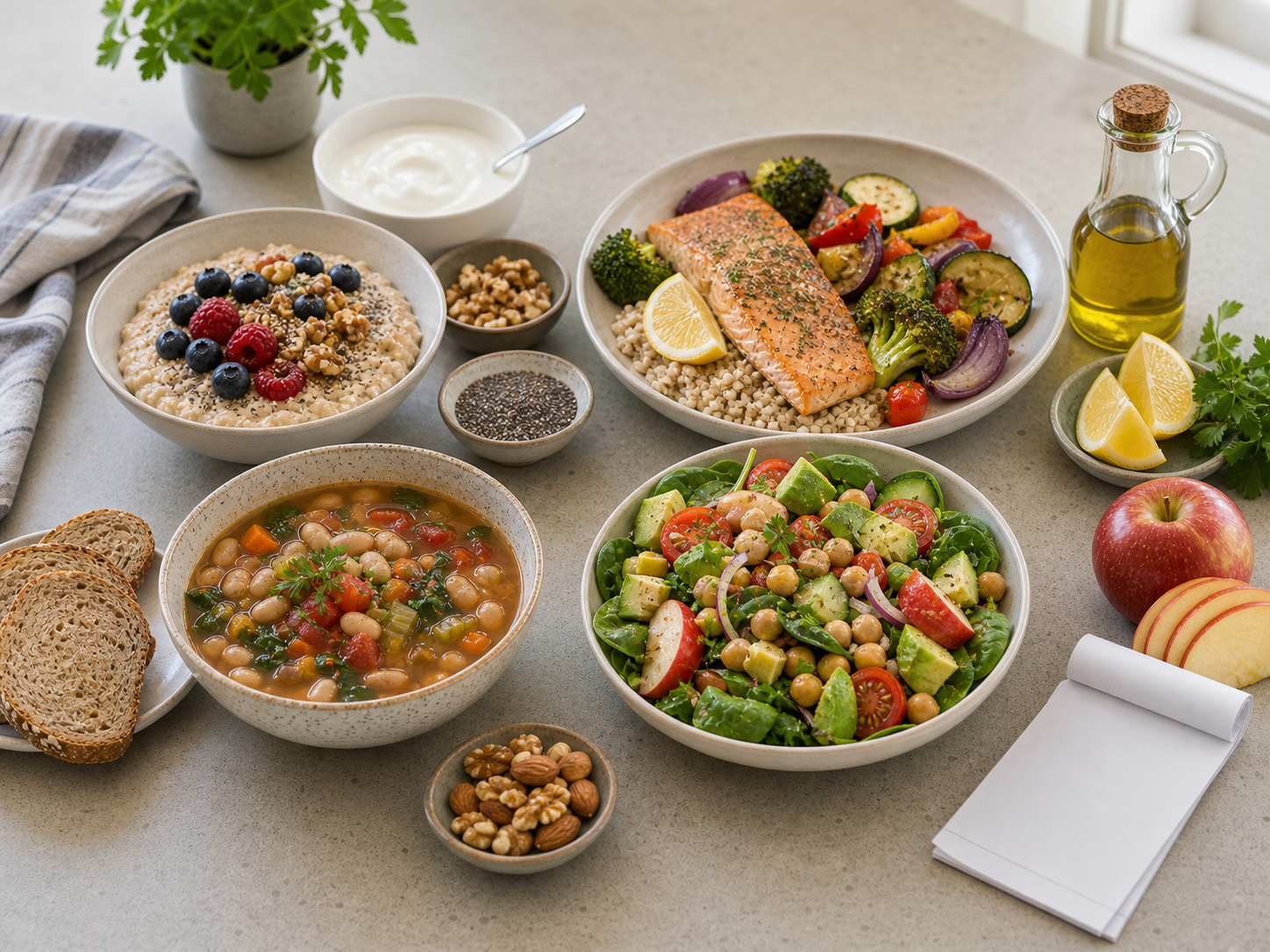
- Breakfast: oats with berries, walnuts, chia, and plain yogurt.
- Lunch: chickpea avocado salad with greens, tomatoes, cucumber, lemon, and whole-grain bread.
- Dinner: salmon with roasted vegetables, barley, olive oil, herbs, and citrus.
- Backup: bean vegetable soup with no-salt-added tomatoes and a whole-grain side.
- Snack: apple with nuts, yogurt with berries, or vegetables with hummus.
Heart-Healthy Grocery List on a Budget
Start with oats, rice, barley, potatoes, dry beans, lentils, canned tomatoes, frozen vegetables, cabbage, carrots, apples, bananas, peanut butter, eggs, tofu, plain yogurt, and canned fish when it fits your budget and label goals. Add fresh salmon, berries, nuts, or specialty grains when the budget allows.
The Receipt Method
- Count produce roles: breakfast fruit, snacks, lunch vegetables, dinner vegetables.
- Find fiber anchors: oats, barley, beans, lentils, whole grains, fruit, vegetables.
- Check protein anchors: fish, beans, lentils, tofu, poultry, yogurt, eggs.
- Flag label repeaters: bread, soup, broth, sauces, frozen meals, snacks, sweet drinks.
- Add flavor builders: herbs, garlic, onions, citrus, vinegar, spices, olive oil.
GoalCart tip: scan a receipt or paste a grocery list to check cart-level patterns: protein support, fiber support, sugar risk, processed-food load, and next-trip swaps. For exact sodium, saturated fat, or medical targets, use labels and qualified guidance.
Sample Heart-Healthy Grocery List
Produce
- Spinach, kale, romaine, broccoli, carrots, peppers, tomatoes, mushrooms, onions, potatoes
- Apples, berries, oranges, bananas, pears, grapes, frozen fruit without added sugar
Protein and fats
- Salmon, canned fish, beans, lentils, chickpeas, tofu, poultry, eggs, plain yogurt
- Walnuts, almonds, pumpkin seeds, chia, flax, avocado, olive oil, peanut butter
Grains, pantry, and flavor
- Oats, barley, brown rice, quinoa, whole-grain bread, whole-grain pasta
- No-salt-added tomatoes, lower-sodium broth, frozen vegetables, herbs, garlic, citrus, vinegar, spices
Bottom Line
A heart-healthy grocery list works when it changes the receipt pattern: more produce, more fiber staples, simple proteins, unsaturated fats, smarter label comparisons, and flavor that does not depend on salt. Keep the cart practical enough to repeat.
Heart-Healthy Grocery List FAQ
What are the best heart-healthy groceries?
Vegetables, fruit, oats, barley, beans, lentils, whole grains, fish, plain yogurt, nuts, seeds, olive oil, herbs, citrus, and lower-sodium pantry staples are useful defaults.
Can heart-healthy groceries be affordable?
Yes. Oats, rice, barley, beans, lentils, potatoes, frozen vegetables, cabbage, carrots, apples, bananas, tofu, eggs, and canned tomatoes can form a lower-cost base.
Should I use this list if I have heart disease?
Use this as general grocery organization only. If you have heart disease, high blood pressure, kidney disease, medication concerns, or a prescribed diet, follow guidance from a qualified clinician or registered dietitian.