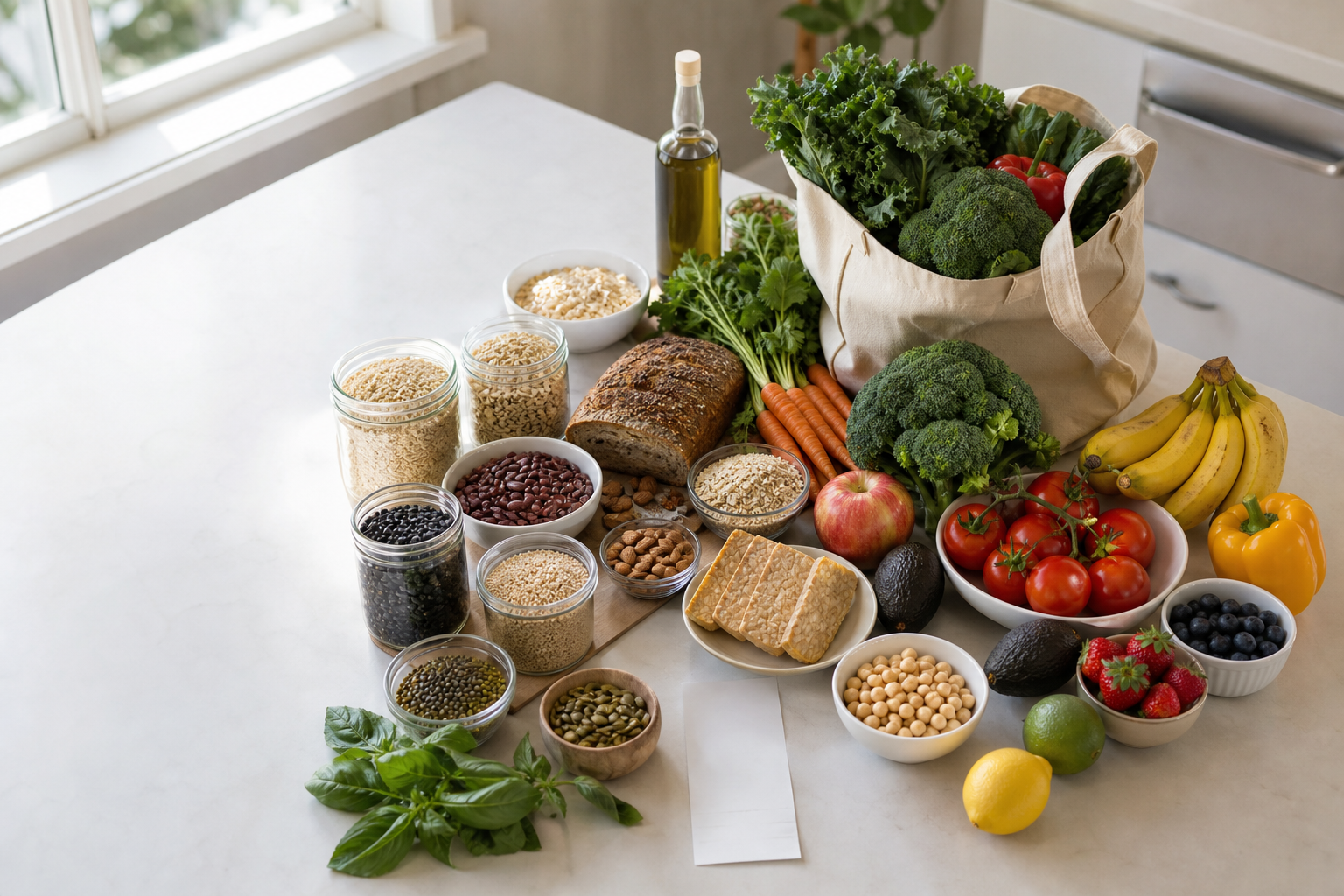
Quick answer: a practical plant-based grocery list includes vegetables, fruit, beans, lentils, chickpeas, tofu, tempeh, edamame, oats, brown rice, quinoa, potatoes, whole-grain bread, nuts, seeds, nut butter, olive oil, herbs, citrus, vinegar, and unsweetened fortified dairy alternatives if they fit your routine. The goal is a receipt that can turn into meals, not a cart full of disconnected health foods.
USDA MyPlate groups beans, peas, lentils, nuts, seeds, and soy products inside the protein foods category. The Dietary Guidelines for Americans also includes a healthy vegetarian dietary pattern, which is useful because it keeps the focus on food groups instead of specialty products. For GoalCart, the translation is simple: make the cart show more plant protein anchors, fiber-rich bases, produce, and flavor builders.
The Plant-Based Cart Formula
Start with the parts of meals, then choose packaged items by label. A plant-based cart works best when every category has a job.
| Cart part | Good defaults | Receipt question |
|---|---|---|
| Produce | Leafy greens, broccoli, carrots, peppers, tomatoes, potatoes, berries, apples, bananas, citrus | Do I have produce for meals and snacks, or only one symbolic vegetable? |
| Plant protein anchors | Beans, lentils, chickpeas, tofu, tempeh, edamame, soy milk, soy yogurt, nuts, seeds, nut butter | Can at least a few meals get enough protein without relying on random snacks? |
| Meal bases | Oats, brown rice, quinoa, potatoes, whole-grain bread, whole-grain pasta, tortillas | Can vegetables and beans turn into bowls, soups, wraps, or breakfasts? |
| Pantry support | Canned tomatoes, canned beans, frozen vegetables, broth, tahini, olive oil, vinegar, spices | Which shelf-stable items make the plan easier on tired nights? |
| Label checks | Protein, fiber, sodium, added sugars, and fortification on milk or yogurt alternatives | Which repeat packaged item needs a better version next trip? |
Plant-Based Does Not Have to Mean All-or-Nothing
Some shoppers want a vegan cart. Some want vegetarian meals. Some simply want two or three dinners each week that rely less on meat and more on beans, grains, vegetables, and soy foods. The receipt method works for all of those goals because it looks at the pattern of what you bought, not the label you give your diet.
Build Around Plant Protein Anchors
A plant-based cart gets weak when it is mostly produce, snack foods, and expensive meat substitutes. Add ordinary anchors first: lentils for soup, black beans for bowls, chickpeas for salads, tofu for stir-fries, tempeh for sandwiches, edamame for freezer backup, and soy milk or soy yogurt when they fit your routine.
Useful plant protein buys
- Dry or canned beans: black beans, pinto beans, kidney beans, white beans, chickpeas
- Lentils: brown, green, red, or pre-cooked lentils for fast meals
- Soy foods: tofu, tempeh, edamame, unsweetened soy milk, plain soy yogurt
- Nuts and seeds: peanut butter, almonds, walnuts, pumpkin seeds, chia, flax, hemp hearts
- Convenience backups: lower-sodium bean soups, frozen grain blends, veggie burgers with useful protein
Use Pantry Staples to Make It Repeatable
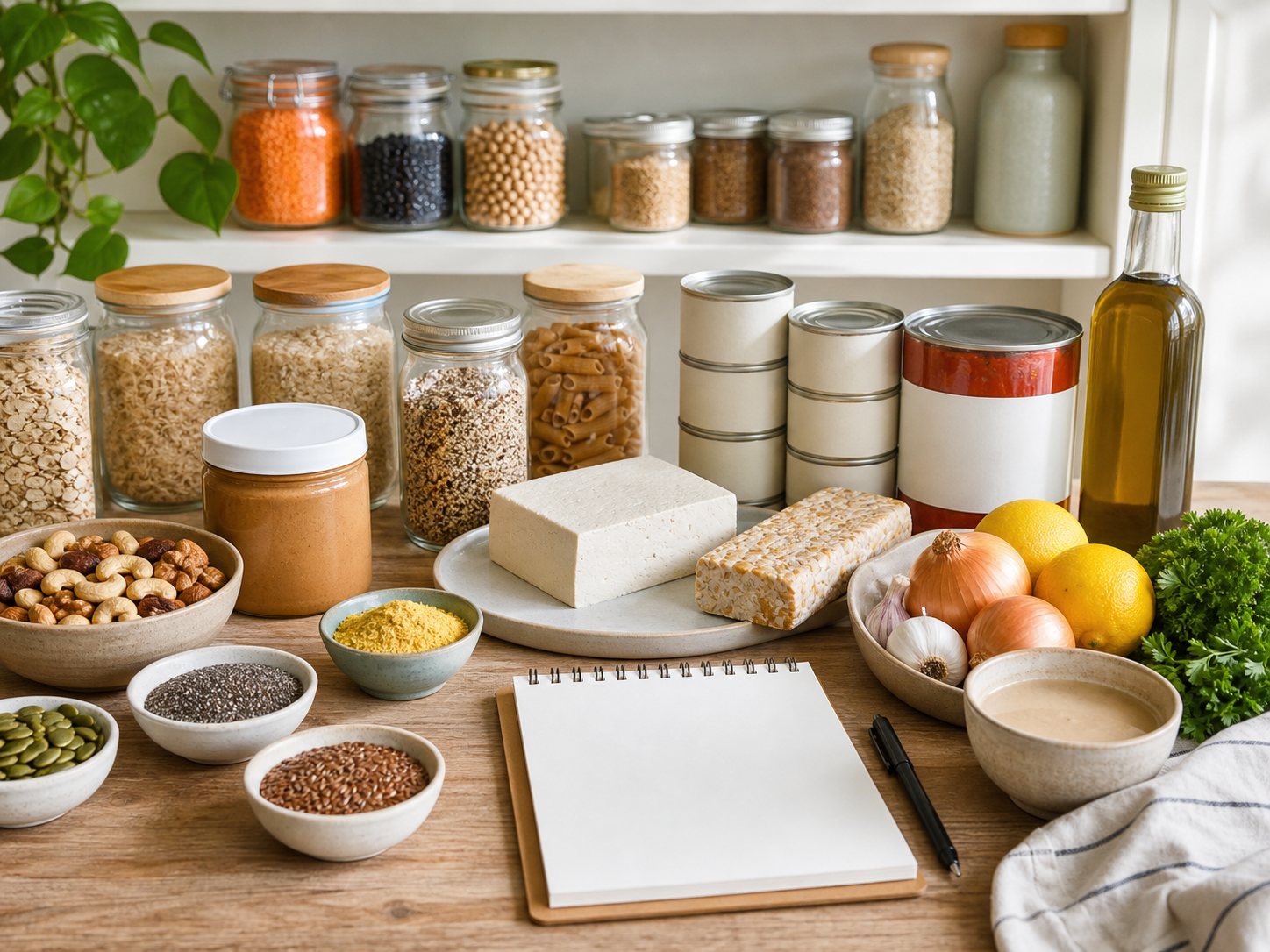
The easiest plant-based meals usually come from shelf-stable parts: beans, lentils, oats, rice, quinoa, pasta, canned tomatoes, broth, spices, and a few fats or sauces. These are not glamorous purchases, but they are what make the receipt turn into dinner.
Pantry list
- Oats, brown rice, quinoa, barley, whole-grain pasta, whole-grain bread, tortillas, potatoes
- Dry or canned beans, lentils, chickpeas, split peas, canned tomatoes, tomato paste
- Frozen vegetables, frozen fruit, edamame, lower-sodium broth, salsa, hummus, tahini
- Olive oil, vinegar, garlic, onions, ginger, lemons, limes, herbs, spices, nutritional yeast if you like it
Use Labels on the Products That Repeat
Plant-based packaged foods vary a lot. Some are useful shortcuts; others are mostly sodium, refined starch, or added sugar with a healthy-looking front label. The FDA Nutrition Facts label is most helpful on the repeat items: plant-based milks, yogurts, meat alternatives, frozen meals, breads, wraps, sauces, soups, and snack foods.
- Protein: compare plant milks, yogurts, burgers, tofu products, and frozen meals.
- Fiber: look for beans, lentils, whole grains, vegetables, fruit, nuts, and seeds doing real work.
- Added sugars: check flavored plant milks, yogurts, cereals, granola, bars, and sauces.
- Sodium: compare canned beans, soups, frozen meals, meat alternatives, sauces, and breads.
- Fortification: if you use dairy alternatives, check whether they are fortified with nutrients that matter for your needs.
Vegan note: MedlinePlus notes that vitamin B12 is found naturally in animal products. If your cart is fully vegan, pay attention to fortified foods or supplements and ask a qualified clinician or registered dietitian about your personal needs.
Plant-Based Meal Combos From One Cart
Before you leave the store, the cart should imply actual meals. If it only contains ingredients that sound healthy by themselves, the week still gets hard.
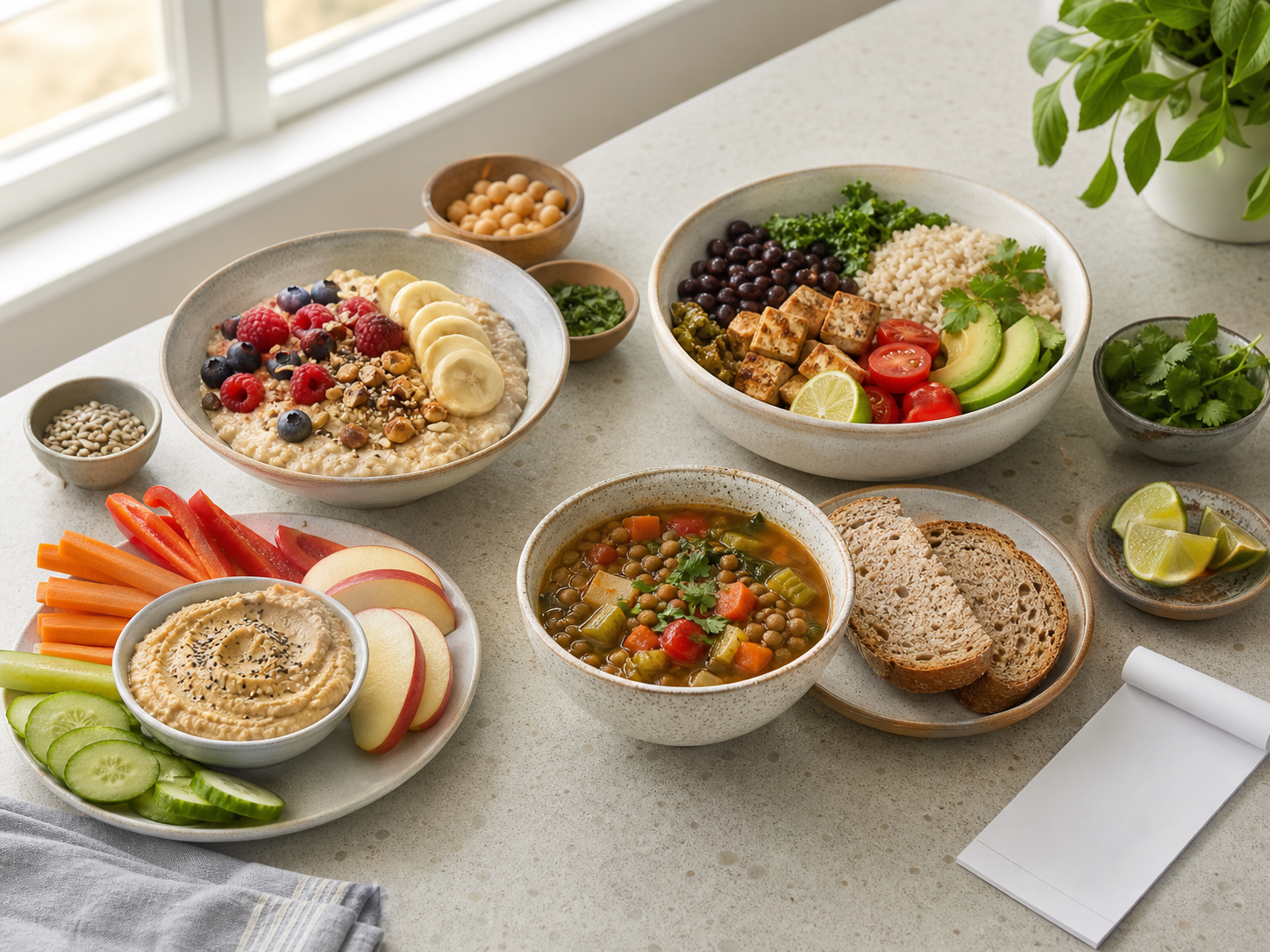
- Breakfast: oats with berries, banana, peanut butter, chia, and fortified soy milk.
- Lunch: brown rice, black beans, greens, tomatoes, avocado, salsa, lime, and pumpkin seeds.
- Dinner: lentil vegetable soup with whole-grain bread and a side of fruit.
- Fast bowl: tofu, frozen broccoli, edamame, rice, ginger, garlic, and a lower-sodium sauce.
- Snack: hummus with carrots and peppers, apple with peanut butter, or nuts with fruit.
Plant-Based Grocery List on a Budget
Plant-based shopping can get expensive when the cart leans on specialty bars, frozen entrees, drinks, and meat substitutes. The budget version starts with oats, rice, potatoes, dry beans, lentils, carrots, cabbage, onions, frozen vegetables, bananas, apples, peanut butter, tofu, canned tomatoes, and a few spices.
Budget defaults
- Oats, rice, potatoes, pasta, tortillas, whole-grain bread when the price is reasonable
- Dry lentils, dry beans, canned beans, chickpeas, peanut butter, tofu, edamame
- Carrots, cabbage, onions, broccoli, frozen vegetables, bananas, apples, oranges
- Canned tomatoes, salsa, garlic, cumin, chili powder, curry powder, vinegar, lemon or lime
The Receipt Method
- Circle plant protein anchors: beans, lentils, tofu, tempeh, edamame, soy foods, nuts, seeds.
- Count produce roles: breakfast fruit, snack produce, lunch vegetables, dinner vegetables.
- Find meal bases: oats, rice, quinoa, potatoes, bread, pasta, tortillas.
- Flag packaged repeaters: plant milks, yogurts, meat alternatives, frozen meals, sauces, snacks.
- Add flavor builders: herbs, citrus, garlic, onions, vinegar, spices, sauces that fit your label goals.
GoalCart tip: scan a receipt or paste a grocery list to check cart-level patterns: protein support, fiber support, sugar risk, processed-food load, and next-trip swaps. For exact nutrients, use the Nutrition Facts label and follow professional guidance when you have medical needs.
Sample Plant-Based Grocery List
Produce
- Spinach, kale, romaine, broccoli, carrots, peppers, tomatoes, cucumbers, mushrooms, onions, potatoes
- Apples, bananas, berries, oranges, pears, grapes, frozen fruit without added sugar
Plant protein and fats
- Black beans, pinto beans, chickpeas, lentils, tofu, tempeh, edamame
- Peanut butter, almonds, walnuts, pumpkin seeds, chia seeds, flaxseed, tahini
- Unsweetened fortified soy milk or plain soy yogurt if they fit your routine
Grains, pantry, and flavor
- Oats, brown rice, quinoa, barley, whole-grain bread, whole-grain pasta, tortillas
- Canned tomatoes, lower-sodium canned beans, lower-sodium broth, frozen vegetables
- Olive oil, vinegar, garlic, ginger, onions, herbs, lemons, limes, cumin, paprika, curry powder
Bottom Line
A plant-based grocery list works when the receipt can become breakfast, lunch, dinner, and snacks without heroic cooking. Buy the anchors first: beans, lentils, tofu, tempeh, whole grains, produce, nuts, seeds, and flavor builders. Then use labels to improve the packaged foods you repeat most.
Plant-Based Grocery List FAQ
What are the best plant-based proteins to buy?
Beans, lentils, chickpeas, tofu, tempeh, edamame, soy milk, soy yogurt, peanut butter, nuts, and seeds are useful grocery defaults. The best choice is the one you can turn into meals repeatedly.
Is plant-based shopping automatically healthy?
Not automatically. A plant-based cart can still be high in added sugar, sodium, or ultra-processed snack foods. Use the receipt to check whether the cart has produce, protein anchors, fiber-rich bases, and useful pantry support.
Can I use this list if I am vegan?
Yes, but treat it as general grocery organization. If you avoid all animal products, pay special attention to fortified foods or supplements for nutrients such as vitamin B12, and ask a qualified professional about your personal needs.